
Thai Butternut Coconut Curry
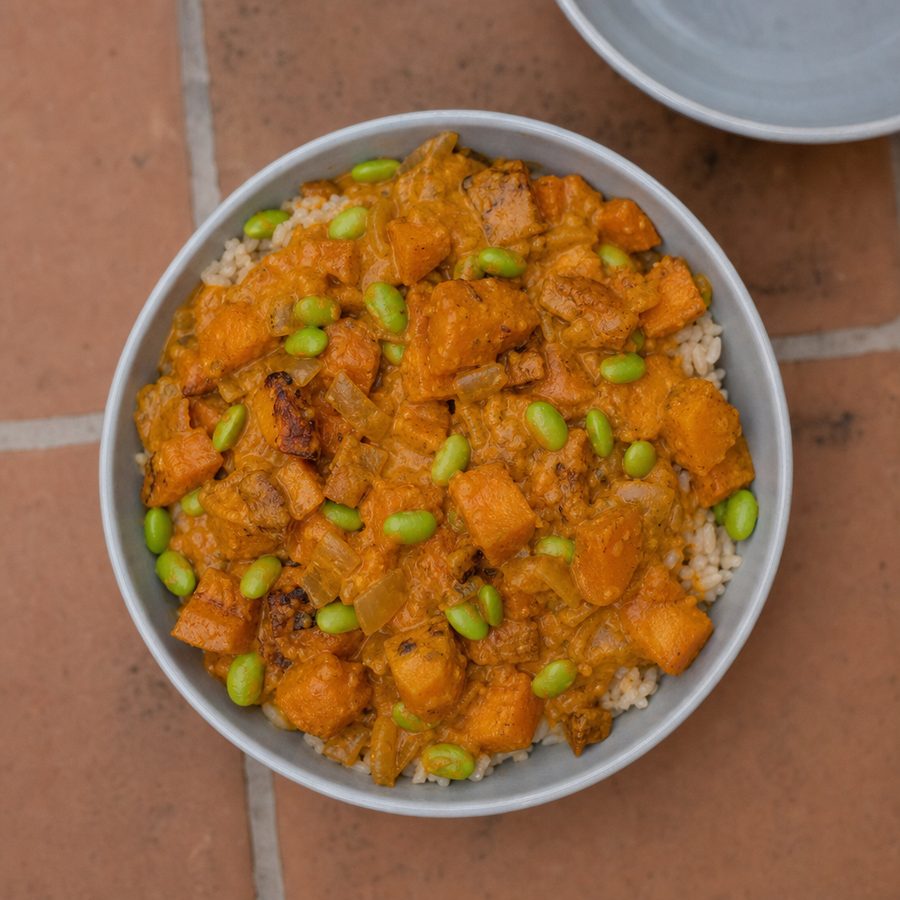
A creamy coconut-milk curry with tender butternut squash, edamame, and red bell pepper, warmed with garlic, ginger, and turmeric and finished with lime and cilantro over jasmine rice.
Why You'll Love This Recipe
This is a warming, one-pot bowl for anyone who wants a comforting dinner that leans entirely on plants. The sweet, custardy butternut squash and the fresh green edamame sit in a rich coconut sauce over jasmine rice, so it eats like something indulgent while being built almost entirely from vegetables, legumes, and pantry aromatics. It comes together in a single pot and reheats beautifully, which makes it a practical choice for a weeknight or for cooking once and eating across a few days.
A curry like this is built in stages. Softening the onion first, then blooming the garlic, ginger, tomato paste, and turmeric in the hot coconut oil pulls out their aromatic compounds and deepens the base before any liquid goes in. Simmering the squash directly in the coconut milk lets it turn silky and lets some of its natural sweetness dissolve into the sauce, so the whole pot tastes cohesive rather than like vegetables sitting in broth. The coconut aminos add a savory, faintly sweet depth, and the lime juice stirred in at the very end keeps the richness from feeling heavy.
Textures vary, and the bowl has staying power. The edamame brings plant protein and the squash and edamame together add plenty of fiber, so the bowl holds you rather than leaving you hungry an hour later. The jasmine rice soaks up the sauce and rounds everything out, the bell pepper adds a fresh snap, and the turmeric and ginger give it a gentle warmth. It is the kind of meal that feels rich and grounding while still being made of ingredients you can feel good about eating regularly.
Ingredients
- 1 small butternut squash, cubed
- 3 cups shelled edamame
- 1 red bell pepper, sliced
- 1 1/4 cups coconut milk
- 1 onion, diced
- 4 cloves garlic, minced
- 1 tbsp grated ginger
- 2 tbsp tomato paste
- 1 tsp turmeric
- 2 tbsp coconut aminos
- 2 tbsp coconut oil
- 3 1/2 cups cooked jasmine rice
- 1/2 cup cilantro
- 2 tbsp lime juice
- 1/2 tsp salt
Instructions
- Cook the rice: Rinse the jasmine rice under cool water, swirling until the water runs mostly clear, then drain. Simmer it in water in a covered pot until the grains are tender and the liquid is absorbed, about 15 minutes. Turn off the heat and let it steam, covered, while you make the curry; fluff with a fork before serving.
- Prep the vegetables: Peel the butternut squash, scoop out the seeds, and cut the flesh into bite-size cubes, keeping them even, since the pot comes off the heat when the last one is tender and a large cube holds everything up. Dice the onion, mince the garlic, and grate the ginger. Slice the red bell pepper into strips and roughly chop the cilantro; set everything aside in separate piles.
- Build the aromatic base: Melt the coconut oil in a large pot or deep skillet over medium heat. Add the onion and cook until soft and translucent, about 4 to 5 minutes, so that its raw bite is gone before any liquid goes in, then stir in the garlic and ginger and cook until fragrant, about 1 minute. Stir in the tomato paste and turmeric and cook for another minute, until the paste darkens slightly and coats the aromatics.
- Simmer the squash: Add the butternut squash and pour in the coconut milk along with a splash of water. Bring to a gentle simmer rather than a boil, because coconut milk splits into oil and solids if you push it hard, then cover partially and cook until the squash is nearly fork-tender, about 15 minutes, stirring now and then so nothing sticks to the bottom.
- Add edamame and pepper: Stir in the shelled edamame and sliced bell pepper, adding them now rather than at the start, since both would be gray and collapsed by the time the squash was soft. Continue simmering, uncovered, until the squash is completely soft and the pepper has softened but still holds a little bite, about 8 minutes.
- Season and serve: Stir in the coconut aminos, lime juice, and salt off the heat, then taste and adjust, because lime simmered in the pot goes flat and it is the only sharp thing against all that coconut. Spoon the curry over the fluffed jasmine rice and garnish with the chopped cilantro.
Variations
- Sweet potato swap: Trade the butternut squash for cubed sweet potato. It brings the same sweetness and creamy texture and simmers in about the same time, so the method stays the same.
- Spinach or kale: Stir a few handfuls of fresh spinach or chopped kale in during the last couple of minutes until just wilted, for extra greens and color.
- Bring the heat: Add a minced fresh chili or a spoonful of red curry paste along with the garlic and ginger for a curry with a real kick.
- Chickpea boost: Fold in drained, rinsed canned chickpeas with the edamame for even more plant protein and a heartier bowl.
- Peanut finish: Stir a spoonful of peanut butter into the sauce as it simmers for a nuttier, richer curry; this adds nuts.
Storage & Leftovers
Cooled leftovers keep well in an airtight container in the refrigerator for up to four days. Store the curry and rice separately if you can, since the rice tends to soak up sauce and soften over time; keeping them apart keeps both at their best.
To reheat, warm the curry gently in a saucepan over medium-low heat, adding a splash of water or coconut milk to loosen it as it thickens in the fridge. Stir often until heated through. There is nothing wrong with the microwave here. Cover the bowl loosely and stir at least once so the squash heats through.
To get ahead, make the full curry a day or two in advance and cook fresh rice when you are ready to eat. The flavors deepen overnight as the aromatics settle into the sauce, so a make-ahead batch often tastes even better than the day it was cooked.
Notes & Tips
- Pick the right squash: Choose a butternut squash that feels heavy for its size with a matte, firm skin. A pre-cubed package from the produce section is a fine shortcut on a busy night and saves you the hardest knife work.
- Full-fat for richness: Full-fat coconut milk gives the sauce its signature creaminess. A light version will work but the curry will taste thinner, so add it a little more slowly and let it reduce.
- Edamame, frozen is ideal: Frozen shelled edamame goes straight into the pot, no thawing needed. Add it in the final stretch so it stays bright green and just tender rather than mushy.
- Balance the finish: Taste before serving and adjust: more lime juice if it tastes flat, a little more salt or coconut aminos if it needs depth. The squash's sweetness varies, so the finishing seasoning is where you dial it in.
- Know when the squash is done: The squash is ready when a fork slides through a cube with no resistance and the edges are just starting to melt into the sauce. If it still has a firm center, give it a few more minutes.
- Serve it fresh and bright: Set out extra lime wedges and cilantro at the table. A final squeeze of lime and a shower of fresh herbs right in the bowl lifts the whole dish.
Nutrition & Mindful Eating
- Squash, coconut milk and edamame are what make this work. The squash breaks down and sweetens the sauce, the coconut milk carries the spice into every spoonful, and the edamame stays firm and green so there is something to bite through.
- Butternut squash simmered this long goes silky and tastes far sweeter than it does raw, and the orange bleeding into the sauce is beta-carotene, which the body converts into vitamin A.
- Edamame goes in near the end and stays bright and squeaky, which is exactly the texture the pot needs, and each spoonful of it brings complete plant protein and fiber to a bowl of vegetables.
- Ginger, garlic and turmeric fried in coconut oil with tomato paste until it darkens are where the depth comes from. The turmeric turns the sauce gold, the tomato paste turns it savory, and the kitchen smells like it hours later.
- Lime squeezed in off the heat and cilantro torn over the top keep a rich pot tasting sharp, and the rice underneath takes up the sauce that would otherwise stay in the bowl.
- As you eat, watch how completely the squash has dissolved into the sauce while the edamame has not, and let the bowl warm you slowly rather than finishing it before it is cool enough to taste.
Frequently Asked Questions
Can I use pre-cut butternut squash to save time?
Yes. Pre-cubed squash from the produce or freezer section works well and skips the toughest prep. If it is frozen, add it straight to the pot; it may release a little extra water, so let the sauce simmer a couple of minutes longer to thicken.
My sauce came out too thin. How do I fix it?
Let it simmer uncovered for a few extra minutes so some of the liquid cooks off and the squash softens further into the sauce. Mashing a few cubes of the cooked squash against the side of the pot also naturally thickens everything.
What can I use instead of coconut aminos?
Coconut aminos add a savory, slightly sweet depth. If you need a swap, tamari or any gluten-free soy sauce works, though it is saltier, so start with less and taste before adding the finishing salt.
Can I make this without rice?
Absolutely. The curry is satisfying on its own as a bowl, or you can spoon it over cauliflower rice or a scoop of quinoa. Just note the nutrition information here is calculated with jasmine rice.