
Three-Cheese Baked Frittata
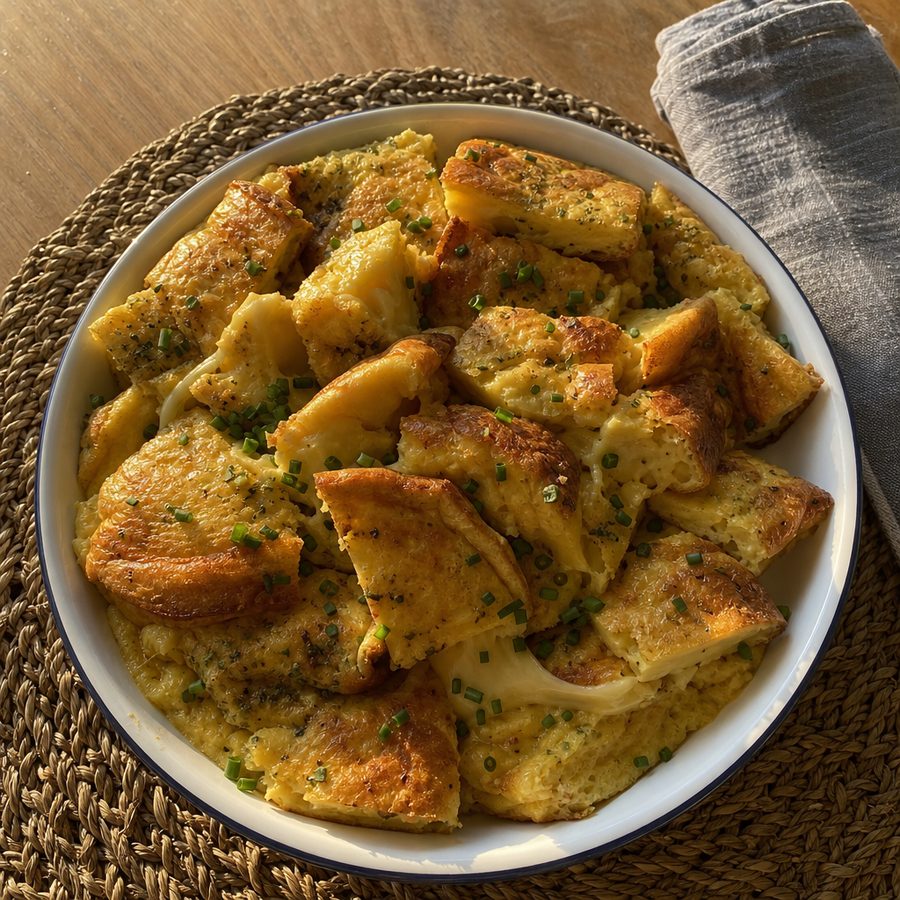
A tender oven-baked egg frittata enriched with butter and layered with sharp parmesan, melting mozzarella, and creamy pockets of ricotta.
Why You'll Love This Recipe
This is a hearty, protein-rich breakfast built around eggs and three cheeses, baked into a single skillet you can slice like a pie. It suits anyone who wants a filling savory start to the day with almost nothing to prep, and it works just as well as a quick supper or a make-ahead meal to slice through the week. Cold wedges eat well straight from the refrigerator, which is most of the argument for baking one on a Sunday afternoon.
The cheeses are layered rather than all mixed in. Parmesan and half the mozzarella go into the raw egg for an even, salty backbone, while the ricotta is dotted on top so it stays in soft, creamy pockets instead of disappearing. Finishing in the oven rather than only on the stovetop lets the custard set gently and puff without a rubbery bottom, and the butter swirled up the sides keeps the edges from sticking and gives them a golden lift.
It satisfies because eggs and cheese are rich in complete protein and fat, which keep you full for hours without a mid-morning slump. The ricotta and mozzarella add a soft, custardy texture against the crisp golden edges, and the parmesan brings a deep savory note that makes each wedge taste more indulgent than the short ingredient list would suggest. Five ingredients is the whole of it, and four of them are things most kitchens already keep on hand.
Ingredients
- 10 large eggs
- 1/2 cup grated parmesan
- 1 cup shredded mozzarella
- 3/4 cup ricotta
- 2 tbsp butter
Instructions
- Preheat the oven: Preheat the oven to 375°F (190°C) and set a rack in the center of it, since a frittata sitting too near the top browns and puffs before the middle has set at all.
- Whisk the eggs: Crack the eggs into a bowl and whisk them well with the parmesan and half of the mozzarella, until the yolks and whites are fully blended and the surface has gone slightly frothy. Whisk for longer than feels necessary, because streaks of unmixed white bake into rubbery ribbons through the finished wedge.
- Melt the butter: Melt the butter in an ovensafe skillet over medium heat, swirling the pan so the butter coats the bottom and climbs the sides. Let it stop foaming but do not let it brown, since browned butter carries a nutty flavor that fights the fresh dairy in the cheeses.
- Add the eggs and cheese: Pour the egg mixture into the hot buttered skillet. Dot spoonfuls of ricotta evenly across the surface, then sprinkle the remaining mozzarella over the top. Leave the ricotta in distinct spoonfuls rather than stirring it through, because those pockets are what give the middle its soft creamy patches.
- Bake until set: Transfer the skillet to the oven and bake for 18 to 22 minutes, until the frittata is puffed, golden at the edges, and just set in the center with no liquid jiggle when you nudge the pan. Start checking at 18 minutes, since eggs move from just set to dry very quickly.
- Rest and cut: Let the frittata cool in the pan for a few minutes before you cut it, since the custard goes on setting off the heat and a wedge cut straight from the oven will weep onto the plate. Cut it into wedges and serve warm.
Variations
- Crispy bacon: Cook strips of bacon until crisp, drain, crumble, and stir into the egg mixture before baking. This adds pork.
- Browned sausage: Brown loose breakfast sausage in the skillet until fully cooked and no longer pink, then pour the eggs over it. This adds pork.
- Smoked salmon: Fold torn pieces of smoked salmon into the egg mixture just before it goes in the oven. This adds fish.
- Sharp cheddar top: Swap the top layer of mozzarella for shredded sharp cheddar for a tangier, more golden crust. This adds a different cheese.
- Extra-rich custard: Whisk in a couple of additional egg yolks for a silkier, more custardy set. This adds more egg.
Storage & Leftovers
Keep leftover wedges in an airtight container in the refrigerator for up to four days. Let them cool fully before covering so condensation does not make the surface soggy.
To reheat, warm a wedge in a 350°F (175°C) oven or toaster oven for several minutes until heated through, which keeps the edges from turning tough. A skillet over low heat with a little butter also works; the microwave is fastest but can make the eggs slightly rubbery, so use short bursts.
To get ahead, whisk the eggs with the parmesan and mozzarella the night before and refrigerate the mixture covered. In the morning you only need to melt the butter, pour, dot with ricotta, and bake.
Notes & Tips
- Use whole-milk cheeses: Whole-milk ricotta and mozzarella melt more smoothly and stay creamier than low-fat versions, which can turn watery and grainy in the oven.
- Drain wet ricotta: If your ricotta looks loose or pooled with liquid, spoon it into a fine strainer for a few minutes first so the frittata does not weep.
- Grate your own parmesan: A wedge grated fresh melts better and tastes sharper than pre-grated parmesan, which is often coated to prevent clumping.
- Judge doneness by the center: The frittata is done when the middle no longer jiggles like liquid but still looks moist; it firms up more as it rests, so pull it before it looks dry.
- Let it rest before cutting: A few minutes out of the oven lets the eggs finish setting, so the wedges hold their shape instead of tearing.
- Serve it any temperature: This frittata is just as good at room temperature as hot, which makes it easy to plate for a crowd or pack for later.
Nutrition & Mindful Eating
- The eggs and the three cheeses set into one thing in the oven. The eggs give the structure and the complete protein, the ricotta keeps the middle custardy, and the parmesan and mozzarella do the browning on top.
- Eggs beaten well and poured into a buttered pan puff at the edges and stay tender in the center, and the yolks bring choline and the fat that makes the whole thing taste rich rather than merely set.
- Ricotta goes in as loose curds rather than stirred through, so you hit soft pockets of it as you cut in, milky and faintly sweet against the salt of the other two cheeses.
- Parmesan grated over the top turns into a savory crust while the mozzarella underneath melts into strands, and that browned salty edge is why people reach for the corner piece.
- Butter in the pan keeps the eggs from gripping and gives the underside its gold color, and a wedge this rich in protein and fat holds you well past the middle of the morning.
- As you eat, notice the way the crust gives to a fork and the center stays soft underneath, and sit down with the plate rather than eating a wedge standing over the pan.
Frequently Asked Questions
Do I need a special pan to bake this?
You need an ovensafe skillet, meaning one whose handle can go from the stovetop into the oven. Cast iron or a fully metal nonstick pan both work well; avoid pans with plastic or rubber handles.
Why did my frittata stick to the pan?
Sticking usually means there was not enough fat on the surface or the pan was not hot enough when the eggs went in. Let the butter fully coat the bottom and climb the sides, and give it a moment to heat before pouring.
Can I make this without a stovetop step?
The butter and skillet warm-up help the bottom set and release cleanly, but you can pour the buttered egg mixture into a warm greased baking dish and bake it through instead. The bottom will be softer rather than lightly crisp.
How do I know when it is set and not overbaked?
Nudge the pan; the center should hold firm with no liquid ripple but still look moist and glossy. Pull it at that point, because carryover heat continues to cook the eggs as they rest and overbaking makes them dry.