
Blackened-Style Tilapia Collard Green Wraps
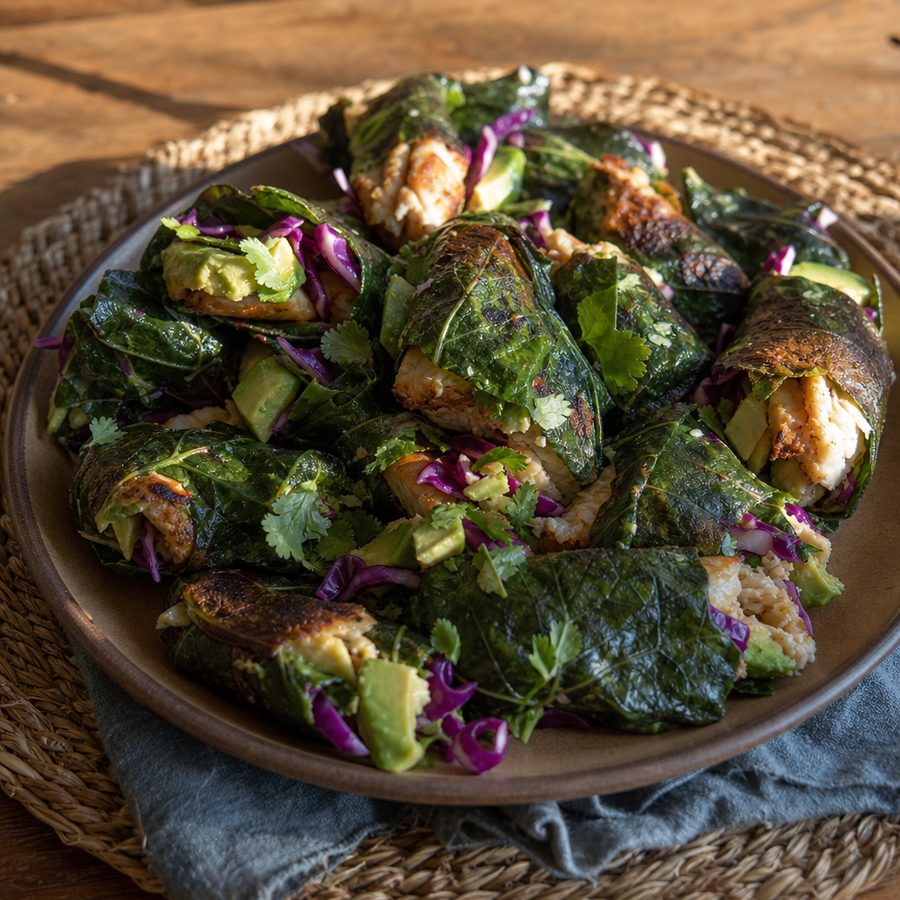
Herb-seasoned tilapia, seared in avocado oil and broken into flakes, rolled up in tender blanched collard leaves with sliced avocado, shredded red cabbage, fresh cilantro, and a squeeze of lime.
Why You'll Love This Recipe
These wraps are a hand-held lunch for anyone who wants something fresh, filling, and free of grains and dairy but is tired of eating salad out of a bowl. The tilapia carries a warm, herby crust, the collard leaf stands in for a tortilla, and the avocado and lime keep every bite cool and bright. It travels well and eats cleanly, which makes it a good choice for a packed lunch or a light dinner that comes together in about the time it takes to cook the fish.
The collard leaf is a wrapper here, not a side vegetable. A raw collard leaf is stiff and tastes harsh, but a quick dip in boiling water followed by an ice bath softens the leaf so it folds without cracking while keeping its color and a little structure. Drying the leaf well afterward matters just as much, because a dry leaf holds a snug roll and a wet one falls apart. Searing the tilapia dry in hot avocado oil builds a browned, oregano-and-garlic crust for flavor and texture before the fish is flaked into the wrap.
Textures contrast, and the fillings are balanced against each other. Tilapia is a mild fish that delivers a lot of protein, so the wraps keep you full without feeling heavy. Avocado adds richness and a creamy counterpoint to the crisp shredded cabbage, while the lime and cilantro cut through with acidity and freshness. Collard greens and cabbage bring fiber and crunch, so you finish the meal feeling fed rather than weighed down.
Ingredients
- 4 tilapia fillets (about 640g)
- 8 large collard leaves, stems trimmed
- 2 medium avocados, sliced
- 3 cups shredded red cabbage
- 1/4 cup cilantro
- 3 tbsp avocado oil
- 1 tbsp dried oregano
- 2 cloves garlic, minced
- 2 tbsp lime juice
- 1/2 tsp salt
Instructions
- Blanch the collards: Trim the thick stem out of each collard leaf so the leaf lies flat and rolls easily. Bring a wide pot of water to a boil. Dip each leaf in the boiling water for about 20 seconds, just until it turns bright green and pliable, then immediately transfer it to a bowl of ice water to stop the cooking. Lift the leaves out and pat them thoroughly dry with a towel, since wet leaves make a soggy wrap.
- Prep the fillings: Mince the garlic. Shred the red cabbage into thin ribbons. Halve, pit, and slice the avocados. Roughly chop the cilantro. Juice the lime and set everything within reach, until the board is ready and nothing is left to chop, since the wraps come together quickly once the fish is off the heat.
- Season the tilapia: Pat the tilapia fillets dry with a towel so they sear rather than steam. Rub both sides of each fillet all over with the dried oregano, minced garlic, and salt when the pan is already heating, pressing the seasoning into the flesh.
- Sear the fish: Heat the avocado oil in a skillet over medium-high heat until it shimmers. Lay the fillets in the pan and sear undisturbed for 3 to 4 minutes per side, until the outside is browned and the flesh is opaque and flakes easily with a fork, reaching an internal temperature of 145°F (63°C). Transfer to a plate and break the fillets into large flaky pieces with the fork.
- Assemble the wraps: Lay a blanched collard leaf flat, vein-side up. Pile on a small handful of shredded cabbage, a share of the flaked tilapia, a few slices of avocado, and a sprinkle of cilantro, then finish with a squeeze of lime. Fold in the sides and roll the leaf up snugly like a burrito until the seam sits underneath, so that the wrap's own weight holds it shut. Repeat with the remaining leaves and serve seam-side down.
Variations
- Swap the fish: Trade the tilapia for another mild, flaky white fish such as cod or haddock, seasoning and searing it the same way; thicker fillets may need an extra minute per side to reach 145°F (63°C). This swaps in a different fish.
- Butter lettuce cups: Skip the blanching step and spoon the fillings into raw, cupped butter lettuce or Bibb leaves for a lighter, crunchier wrap. Use two overlapping leaves per cup so they hold the filling without tearing.
- Coconut-lime drizzle: Whisk coconut cream with a little lime juice and salt into a pourable sauce and spoon it over the fillings before rolling for a richer, tangy finish. This adds coconut.
- Add carrot and cucumber: Toss shredded carrot and thin cucumber matchsticks in with the cabbage for extra crunch, color, and a cooler, more slaw-like filling.
- Change the herb: If cilantro is not to your taste, replace it with roughly chopped fresh mint or basil, which keep the wraps bright with a different aromatic edge.
Storage & Leftovers
Store the components separately for the best results. Kept in an airtight container in the refrigerator, the cooked tilapia and the blanched collard leaves will hold for up to three days, and the shredded cabbage keeps a similar amount of time. Slice the avocado only when you are ready to eat, since it browns quickly once cut.
These are meant to be eaten cool, so there is no real reheating step. If you prefer the fish warm, gently warm the flaked tilapia on its own in a covered skillet over low heat with a splash of water just until heated through, then assemble the wraps fresh so the leaves and avocado stay crisp and green.
To get ahead, blanch and dry the collard leaves, cook and flake the fish, and shred the cabbage a day in advance, storing each in its own container. At mealtime you only need to slice the avocado, squeeze the lime, and roll. For a packed lunch, carry the rolled wraps and a lime wedge separately and squeeze it on just before eating.
Notes & Tips
- Pick sturdy leaves: Choose the largest, most intact collard leaves you can find at the store, since big leaves are easier to roll and less likely to tear at the vein. Smaller leaves can be overlapped two at a time to make a wrapper.
- Shave the center rib: After trimming the stem, run a knife flat along the thick central rib to shave it thinner so the leaf lies flat and folds without cracking down the middle.
- Dry is everything: Blot the blanched leaves and the seared fish before assembling; excess moisture is the main reason wraps go soggy or slip open.
- Judge the fish by flake: Tilapia is done the moment it turns from translucent to opaque and separates into clean flakes when nudged with a fork; pulling it at that point keeps it moist rather than dry.
- Ripe avocado, sliced late: Use an avocado that yields to gentle pressure but is not mushy, and slice it just before rolling so it stays green and holds its shape in the wrap.
- Adjust the brightness: Taste a wrap and add another squeeze of lime or a pinch of salt if it needs lift; the acid is what keeps the rich avocado and mild fish from tasting flat.
Nutrition & Mindful Eating
- The collard leaf, the fish and the cabbage make the wrap work. The leaf is sturdy enough to roll and hold, the tilapia goes in hot and dark from the pan, and the raw cabbage keeps the middle from going soft.
- Tilapia holds together in the pan rather than falling apart, so it comes out in wide seared pieces you can lay down the center of a leaf, and it carries protein and selenium into a lunch you eat with your hands.
- Collard greens dipped briefly in boiling water turn deep green and pliable, softer and sweeter than they are raw, and they bring folate and vitamin K in a form you can actually roll around a filling.
- Shredded red cabbage stays loud and crisp all the way through, its purple anthocyanins sitting right there in the color, and the avocado is what smooths every bite back out again.
- Garlic, oregano and salt pressed onto the fish go almost black in the hot avocado oil, which is where the smoke and the faint bitter edge come from, and lime and cilantro at the end pull it all back to bright.
- As you eat, hold the wrap in both hands and let the char, the cold cabbage and the give of the leaf each register before you start the next bite.
Frequently Asked Questions
My collard leaves keep tearing when I roll them. What am I doing wrong?
Usually the leaf is either underblanched or the central rib is still too thick. Give it the full dip in boiling water until it turns bright green and flexible, then shave the thick rib flat with a knife so the leaf can fold without splitting.
Can I use frozen tilapia?
Yes. Thaw it fully in the refrigerator, then pat it very dry before seasoning, since surface moisture will keep it from browning and make it steam in the pan instead of searing.
Are these good cold, or do I need to reheat them?
They are designed to be eaten cool, which is what makes them a good packed lunch. The fish is seasoned enough to taste great at refrigerator temperature, so no reheating is needed; just assemble close to eating so the avocado stays fresh.
How do I keep the wraps from getting soggy in a lunchbox?
Dry the blanched leaves and the flaked fish well, and carry the lime wedge separately so you squeeze it on right before eating rather than hours ahead. Rolling the wraps snugly and packing them seam-side down also helps them hold together.