
Tilapia With Fresh Mango Salsa
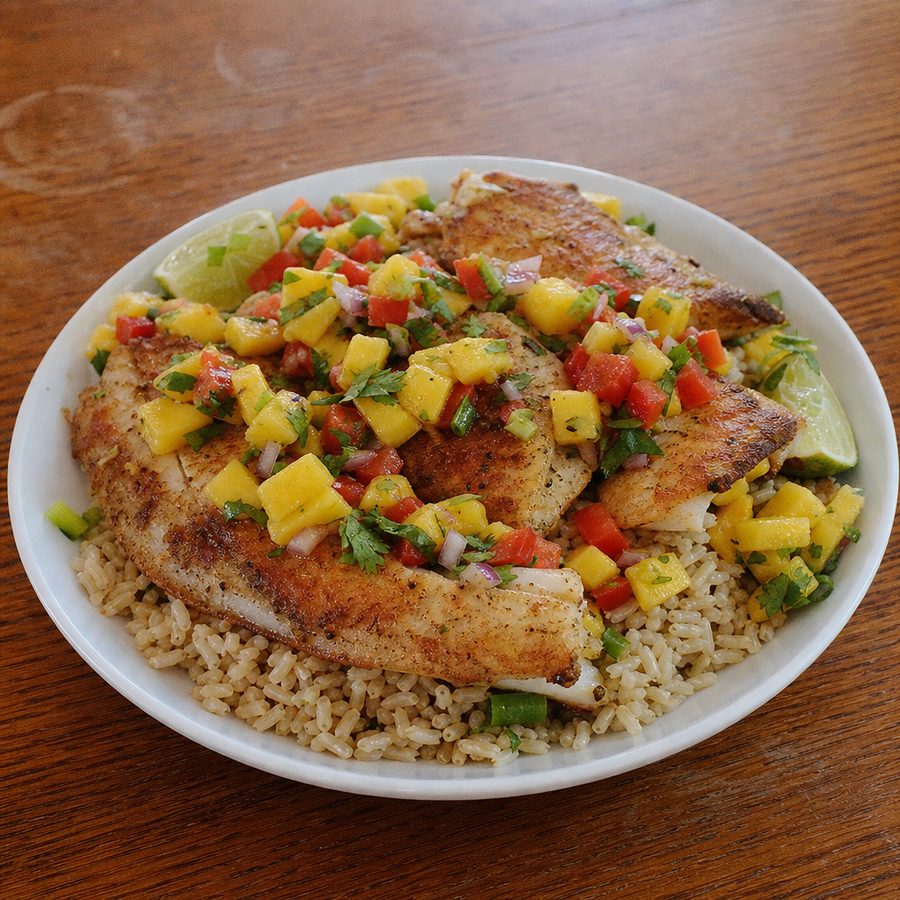
Chili-lime seared tilapia over brown rice, crowned with a bright salsa of ripe mango, red bell pepper, and cilantro, with a tumble of shredded red cabbage alongside.
Why You'll Love This Recipe
This is a light, bright weeknight dinner for anyone who wants a plate that tastes like a getaway without much fuss at the stove. Mild tilapia takes on a warm chili-lime edge, the fresh mango salsa brings sweetness and acidity, and it all comes together in about the time it takes the rice to finish. It suits a cook who wants real flavor and a nourishing meal without a long ingredient list or heavy sauces.
Warm, savory fish against a cool, raw salsa. Rubbing the tilapia with chili powder and lime before it hits the hot oil builds a lightly spiced, golden surface, while the mango, red pepper, and cilantro stay bright and crisp because they are never cooked. A hot pan and dry fillets are the trick to a clean sear rather than a steamed, gray fillet, and splitting the lime juice between the salsa and the fish ties the two halves of the plate together.
The meal is satisfying because it balances protein from the tilapia, slow-digesting whole grains from the brown rice, and plenty of fiber and crunch from the cabbage, pepper, and mango. That mix keeps you full and steady rather than heavy, and the vivid color and fresh aroma make it feel like a treat even though it is simple, everyday cooking. Any salsa left in the bowl is worth keeping, since it is just as good the next day over eggs or folded through a bowl of grains.
Ingredients
- 4 tilapia fillets (about 150 g each)
- 2 cups diced ripe mango
- 1 large red bell pepper, diced
- 1 1/2 cups shredded red cabbage
- 2 1/2 cups cooked brown rice
- 3 tbsp fresh lime juice
- 1 1/2 tsp chili powder
- 1/2 cup chopped cilantro
- 2 tbsp olive oil
- 3/4 tsp sea salt
Instructions
- Have the brown rice ready: This plate builds on brown rice that is already cooked, so warm it through while you work, since rice straight from the refrigerator will cool the fish you lay on top of it. Starting from dry instead, rinse the rice under cold water until it runs clear and simmer it in a covered pot until the grains are tender and chewy, about 40 to 45 minutes, then drain off any water left in the pot.
- Prep the produce: Peel the mango and dice the flesh into small cubes. Core and dice the red bell pepper. Thinly shred the red cabbage. Roughly chop the cilantro and juice the limes.
- Make the salsa: In a bowl, combine the diced mango, the diced red bell pepper, the chopped cilantro, and about half of the fresh lime juice. Toss gently and set it aside for at least 10 minutes, so the lime has time to draw a little juice out of the mango and the salsa comes together as one thing rather than a pile of cut fruit.
- Season the tilapia: Pat the tilapia fillets dry with a paper towel, since a dry surface is what lets the rub grip and the fish brown. Rub both sides with the chili powder, the remaining lime juice, and the sea salt until the surface is evenly coated.
- Sear the fish: Warm the olive oil in a large skillet over medium-high heat until it shimmers. Lay the fillets in the pan and cook undisturbed for 3 to 4 minutes, until the underside is golden, then flip and cook another 3 to 4 minutes. The tilapia is done when it turns opaque and flakes easily with a fork, at an internal temperature of 145°F (63°C).
- Plate and serve: Spoon the brown rice onto each plate, lay a tilapia fillet on top, add a handful of shredded red cabbage alongside, and finish with a generous spoonful of the mango salsa. Add the salsa at the last moment, because it goes watery if it sits on hot rice.
Variations
- Swap the grain: Serve the fish and salsa over quinoa or cauliflower rice instead of brown rice for a different texture and a lighter base.
- Warm the salsa with heat: Add finely diced fresh jalapeño or a pinch of cayenne to the mango salsa for a sweet-and-spicy contrast against the fish.
- Pineapple salsa: Replace the mango with diced fresh pineapple for a tangier, more tropical topping that plays the same bright role on the plate.
- Grill instead of sear: Cook the seasoned fillets on a hot, oiled grill grate for a few minutes per side to add a smoky char that suits the tropical flavors.
- Wrap it up: Fold the fish, cabbage, and salsa into warm corn tortillas for handheld tacos; note that this adds the tortillas as a grain.
Storage & Leftovers
Store leftovers with the fish, rice, and salsa in separate airtight containers in the refrigerator for up to two days. Keeping the salsa apart from the warm components stops the cabbage and mango from going soft and watery.
To reheat, warm the tilapia and rice gently in a covered skillet over low heat with a splash of water, just until heated through; tilapia is delicate and overheating turns it rubbery. Add the cold salsa fresh at serving time rather than reheating it.
To get ahead, cook the rice and make the salsa a day in advance and refrigerate both. When dinner is close, you only need to season and sear the fish, which takes just a few minutes, and the plate comes together right away.
Notes & Tips
- Choose a ripe mango: Pick a mango that gives slightly when pressed and smells fragrant at the stem end; a rock-hard one will taste starchy and won't sweeten the salsa. Let it ripen on the counter for a day or two if needed.
- Dry the fish first: Blot the tilapia thoroughly before seasoning. Surface moisture is the main reason fish steams and sticks instead of forming a golden crust in the pan.
- Make the salsa first: Assemble the salsa before you cook so the mango, pepper, and lime have ten or fifteen minutes to meld; the flavor is noticeably rounder after a short rest.
- Adjust the salt and acid: Taste the salsa before serving and add a little more lime juice if it needs brightness or a pinch of the sea salt if it tastes flat. The fish and salsa should both be seasoned before they meet on the plate.
- Dial the spice up or down: Chili powder blends vary in heat. Start with less if you are sensitive, and add a bit more to the rub if you like a warmer, smokier fish.
- Serve it fresh: This dish is at its best right after cooking, when the fish is hot and the salsa is cool and crisp. Plate it as soon as the fillets come out of the pan.
Nutrition & Mindful Eating
- The plate has three layers and they need each other. Brown rice underneath catches the salsa juices, the tilapia in the middle stays mild on purpose, and the salsa on top is where the sweetness and the heat live.
- Brown rice keeps its bran, so it chews rather than dissolves and gives the plate a nutty base that stands up under something this wet, and the fiber in it is part of why the meal sits so well.
- Tilapia takes a dry rub better than most fish because its surface is fine and close-grained, so the chili powder forms a real crust in the pan while the fillet underneath stays white, moist and full of protein.
- Ripe mango, diced bell pepper and shredded red cabbage all stay raw in the salsa, sweet against peppery against crunchy, and their vitamin C and the cabbage anthocyanins come through untouched because nothing ever meets heat.
- Lime juice is what makes the salsa a salsa, drawing juice out of the mango and keeping the cabbage lively, and the cilantro and the chili on the fish meet in the middle of every bite.
- As you eat, pay attention to the cold salsa arriving on the same fork as the warm crusted fish, and give the plate long enough that the meal actually lands.
Frequently Asked Questions
Can I use frozen tilapia?
Yes. Thaw it fully in the refrigerator overnight or under cold running water, then pat it very dry before seasoning. Excess water from thawing will keep the fish from searing, so drying it well is the key step.
My mango isn't very ripe. What can I do?
An underripe mango will taste starchy rather than sweet. Let it sit on the counter for a day or two until it softens and smells fragrant, or add an extra squeeze of lime and a small pinch of salt to the salsa to draw out what sweetness it has.
How do I know the tilapia is fully cooked?
It should turn from translucent to opaque all the way through and flake easily when you nudge it with a fork. If you use a thermometer, the thickest part should reach 145°F (63°C). Tilapia is thin, so it cooks quickly and can dry out if left too long.
Can I make this dish ahead for lunches?
Yes. Cook the rice and fish and store them separately from the salsa in the refrigerator for up to two days. Keep the salsa in its own container and spoon it on just before eating so the mango and cabbage stay fresh and crisp.