
Tilapia Veracruz over Brown Rice
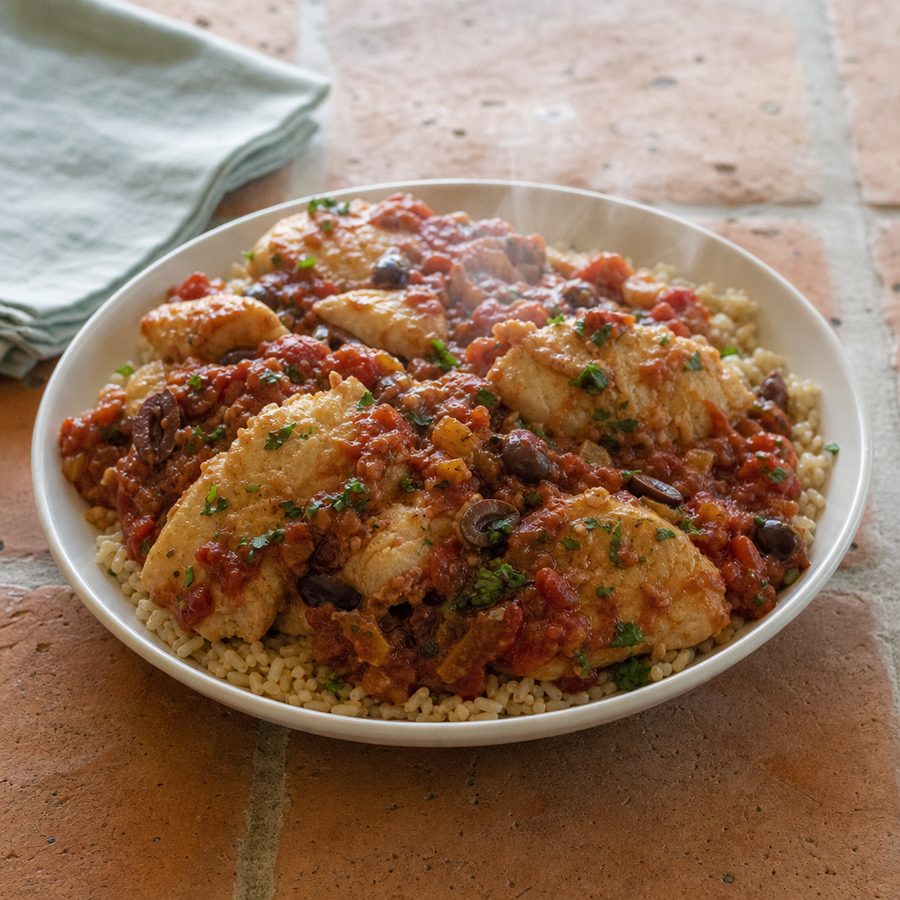
Flaky tilapia fillets poached in a bright simmered sauce of crushed tomatoes, kalamata olives, red bell pepper, onion, and garlic, finished with fresh cilantro and spooned over tender brown rice.
Why You'll Love This Recipe
Mild, quick-cooking tilapia in a lively tomato broth, and the whole lunch happens in one skillet. It suits anyone who wants a satisfying midday meal that does not leave them sluggish, it comes together fast, and it leans on pantry staples like crushed tomatoes and olives. The flavors are coastal and bright, and the whole thing works whether you are cooking for yourself or feeding a table.
The fish poaches right in the sauce rather than beside it. Because the tilapia simmers gently in the tomato broth, it stays moist and takes on the flavor of the garlic, olives, and pepper as it cooks, and the sauce catches the juices the fish releases. Softening the onion and pepper first builds a sweet base, and a short simmer of the tomatoes rounds off their sharp edge before the delicate fillets ever go in.
Mild fish, whole grain, and a lot of vegetables. The tilapia is mild and rich in protein, the brown rice brings whole-grain fiber and a nutty chew, and the tomatoes, pepper, and cilantro layer in vitamins and antioxidants. Olive oil and kalamata olives add a savory richness and heart-friendly fats, so the meal feels satisfying without being heavy, and the bright, briny sauce keeps every bite interesting.
Ingredients
- 4 tilapia fillets (about 560g)
- 3 1/2 cups cooked brown rice
- 1 can crushed tomatoes
- 1/2 cup kalamata olives, sliced
- 1 red bell pepper, sliced
- 1 onion, sliced
- 4 cloves garlic, minced
- 3 tbsp olive oil
- 1/3 cup chopped cilantro
- 1/2 tsp salt
Instructions
- Cook the brown rice: Rinse the brown rice under cold water until it runs clear, then simmer it in water, covered, until the grains are tender and the water is absorbed, about 40 to 45 minutes. Fluff with a fork and set aside.
- Prep the vegetables: While the rice cooks, thinly slice the onion and the red bell pepper, mince the garlic, slice the kalamata olives, and roughly chop the cilantro. Pat the tilapia fillets dry with a paper towel, since a wet fillet slides apart when you lift it into the sauce.
- Saute the base: Heat the olive oil in a wide, deep skillet over medium heat. Add the sliced onion and bell pepper and cook, stirring occasionally, until softened and beginning to color, about 5 minutes, because this is the only sweetness the sauce gets and the tomatoes cannot put it back. Add the minced garlic and cook until fragrant, about 1 minute.
- Simmer the sauce: Pour in the crushed tomatoes and add the sliced olives, salt, and a splash of water. Bring to a gentle simmer and let it cook, stirring now and then, until slightly thickened and the raw tomato edge is gone, about 6 minutes. The sauce has to be thick enough now, since it will not reduce further once the fish is sitting in it.
- Poach the fish: Settle the tilapia fillets into the sauce, spooning some of it over the tops, so that they poach gently on both sides without your having to turn them and break them. Cover and simmer gently until the fish turns opaque and flakes easily with a fork, about 8 to 10 minutes; it is done at an internal temperature of 145°F (63°C).
- Serve: Spoon the rice onto plates or into bowls, top with a fillet and a generous ladle of sauce, since the rice is plain and the sauce is what seasons it, and garnish with the chopped cilantro.
Variations
- Add a little heat: Simmer a sliced jalapeno or a pinch of red pepper flakes into the sauce with the onion and pepper for a gentle warmth that plays well with the briny olives.
- Swap the fish: Use cod, halibut, or another firm white fish in place of tilapia. Thicker fillets may need a few extra minutes of poaching to flake through.
- Brighten with citrus: Add a squeeze of fresh lime juice and a little grated lime zest at the end for a sharper, more citrus-forward finish.
- Add capers: Stir a spoonful of drained capers into the sauce along with the olives for an extra layer of salty, tangy bite.
- Serve over greens: Spoon the fish and sauce over a bed of sauteed spinach or kale instead of, or alongside, the rice for more vegetables on the plate.
Storage & Leftovers
Store leftovers in an airtight container in the refrigerator for up to three days. Keep the fish and sauce together so the tilapia stays moist, and store the rice in the same container or separately as you prefer.
Reheat gently to protect the delicate fish. Warm the fish and sauce in a covered skillet or saucepan over low heat until just heated through, adding a splash of water if the sauce has thickened. The microwave will do at half power, stopping the moment it is hot. Tilapia turns rubbery quickly.
To get ahead, make the tomato, olive, and pepper sauce up to two days in advance and refrigerate it. When you are ready to eat, bring it back to a simmer, tuck in the raw tilapia, and poach the fish fresh so it stays tender. Cooked brown rice also keeps well and can be made ahead.
Notes & Tips
- Pick even fillets: Choose tilapia fillets of similar thickness so they poach at the same rate; if one is much thinner, add it to the sauce a minute or two later than the rest.
- Don't crowd the pan: Use a wide skillet so the fillets sit in a single layer in the sauce. Crowding makes them steam unevenly and harder to lift out whole.
- Taste before salting: Kalamata olives are quite salty, so taste the sauce after they have simmered before adding more salt; you may need less than you think.
- Know when it's done: The fish is ready when it turns from translucent to opaque and separates into clean flakes at the thickest part with light pressure from a fork.
- Cilantro two ways: Stir some chopped cilantro into the sauce at the very end and save the rest for garnish, so you get both a cooked and a fresh green note.
- Make it a bigger batch: The sauce doubles easily and freezes well on its own; poach fresh fish in it whenever you want this meal again rather than freezing cooked fillets.
Nutrition & Mindful Eating
- Fish, sauce and rice arrive as one thing. The tomatoes cook down into something brothy, the brown rice underneath drinks up whatever the fish does not, and the tilapia poaches gently in the center of it all.
- Crushed tomatoes are the whole base, going from sharp to round as they reduce, and their lycopene becomes easier for your body to take up after a long simmer in olive oil.
- Brown rice holds its shape under a wet sauce rather than turning to paste, and its chew and its fiber are what turn a skillet of fish into a lunch that keeps going.
- Kalamata olives are chopped small and stirred through so their brine works into the sauce, and the strips of bell pepper soften but stay sweet, giving the pan something to bite on.
- Onion and garlic soften into the oil first and effectively vanish into the sauce, leaving their depth behind, and the cilantro torn over at the end is the one raw, green thing in a dish that has otherwise all been cooked together.
- As you eat, spoon some of the sauce onto every forkful of rice and notice how easily the fish gives way, and let the meal take the whole of your lunch break rather than half of it.
Frequently Asked Questions
Can I use frozen tilapia?
Yes. Thaw the fillets fully in the refrigerator or under cold running water first, then pat them dry before settling them into the sauce so they poach rather than water down the broth.
Why is my fish falling apart in the sauce?
Tilapia is delicate, so keep the sauce at a gentle simmer rather than a hard boil and avoid stirring once the fillets go in. Spoon sauce over them instead of flipping, and lift them out carefully with a spatula.
Can I use white rice instead of brown?
You can. White rice cooks faster, so adjust the timing accordingly. Brown rice adds more fiber and a nuttier, chewier texture, but the dish works well either way.
How do I keep the sauce from tasting too salty?
The olives and salt both bring saltiness, so hold back on added salt until the sauce has simmered, then taste and adjust. If it does turn out too salty, stir in a splash of water to loosen and mellow it.