
Trout and Potato Breakfast Hash
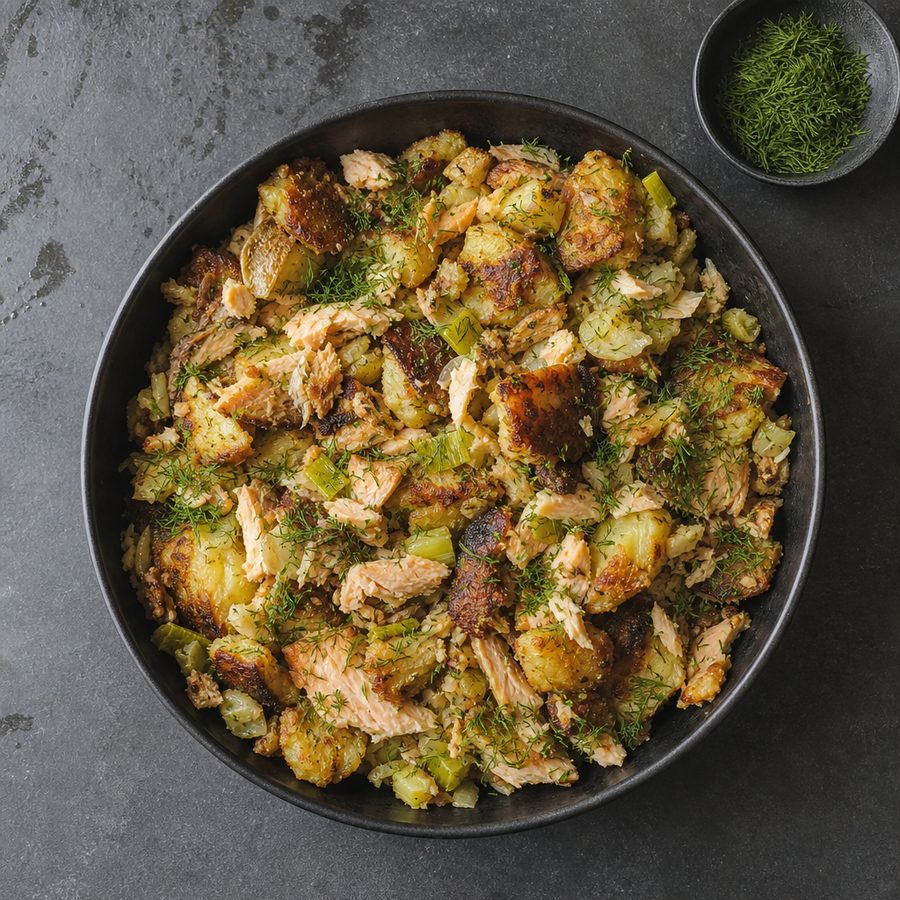
A skillet hash of golden crisped potatoes and softened leeks folded with flaked trout, fresh dill, garlic, and a squeeze of lemon.
Why You'll Love This Recipe
This is a warm, one-skillet breakfast for anyone who wants something more grounding than cereal but still quick to pull together. It leans on flaked trout and crisped potatoes for a savory, filling start to the day, and it works just as well as an easy supper. Because the fish is folded in near the end, it stays tender rather than drying out, making it forgiving for cooks who are still building confidence at the stove.
Spread the potatoes out and do not touch them. Spreading them in a single layer and leaving them undisturbed lets a real golden crust form, which is what gives the hash its texture instead of turning into a soft scramble. The leek brings a gentle sweetness that browns at the edges, the garlic deepens the base, and a final hit of lemon juice and fresh dill lifts everything so the richness of the trout feels bright rather than heavy.
Protein, starch, and fat all in one bowl, so you feel full without feeling weighed down. Nothing about it drags. The trout is rich in omega-3 fats, the potatoes add potassium and steady energy, and the leek and garlic contribute flavor along with gentle fiber. Topped with a fried egg, it becomes even more substantial, the kind of plate that carries you through a busy morning.
Ingredients
- 480 g cooked trout, flaked
- 500 g cooked potatoes, diced
- 1 large leek, sliced
- 3 cloves garlic, minced
- 2 tbsp olive oil
- 3 tbsp fresh dill, chopped
- 1 tbsp lemon juice
- 1/4 tsp salt
Instructions
- Cook and flake the trout: Pat the trout dry and set it in a lightly oiled skillet or on a lined tray. Cook over medium heat or in a 400°F (200°C) oven until the flesh turns opaque and flakes easily with a fork, about 8 to 12 minutes depending on thickness (it is done at an internal temperature of 145°F (63°C)). Let it cool a few minutes, then break it into large flakes with your fingers or a fork, discarding any skin and bones. Set aside.
- Boil the potatoes: Scrub the potatoes and cut them into even bite-size dice. Put them in a pot, cover with cold water, add a pinch of salt, and bring to a boil. Simmer until just fork-tender but not falling apart, about 10 to 12 minutes. Drain well and let them steam-dry in the colander for a minute so they crisp better later.
- Prep the aromatics: Trim the root and dark green top from the leek, halve it lengthwise, and slice into half-moons. Rinse the slices in a bowl of water to remove grit, then drain. Peel and mince the garlic, and chop the dill.
- Crisp the potatoes: Heat the olive oil in a large skillet over medium-high heat. Add the drained potatoes and spread them in a single layer. Let them brown undisturbed for about 6 minutes so a golden crust forms before you stir.
- Soften the leek and garlic: Stir in the sliced leek and minced garlic. Cook, stirring occasionally, until the leek is soft and its edges are lightly crisped, about 5 minutes. Lower the heat if the garlic starts to darken too fast.
- Fold in the trout: Add the flaked trout and fold it through gently, just enough to warm it without breaking the flakes into mush. Cook for about 1 to 2 minutes until heated through.
- Season and serve: Turn off the heat and add the chopped dill, lemon juice, and salt. Toss gently to combine and taste, adjusting salt if needed. Serve hot, topped with a fried egg if you like.
Variations
- Sweet potato swap: Use diced sweet potato in place of the regular potato for a naturally sweeter, softer hash; watch it closely as it browns since it can go from golden to scorched quickly.
- Different fish: Swap the trout for flaked salmon, mackerel, or smoked whitefish for a richer, more assertive flavor while keeping the same method.
- Add greens: Fold a handful of baby spinach or chopped kale in with the leek and let it wilt for a hit of color and extra vegetables.
- Bright and briny: Stir in capers and thinly sliced red onion at the end for a sharper, tangier finish that plays off the lemon and dill.
- Creamy finish: Add a spoonful of crumbled feta or a dollop of Greek yogurt on top just before serving; note this adds dairy.
Storage & Leftovers
Keep leftovers in an airtight container in the refrigerator for up to three days. The dill will mellow over time, so a little extra sprinkled on when you reheat brings back the freshness.
Reheat in a skillet over medium heat with a small drizzle of olive oil to bring back the crisp edges on the potatoes; a microwave works in a pinch but softens the texture. Warm just until heated through so the trout does not overcook and dry out.
To get ahead, cook and flake the trout and boil the potatoes a day in advance and refrigerate them separately. In the morning you only need to crisp the potatoes, soften the leek, and fold everything together, which turns this into a fast weekday meal.
Notes & Tips
- Choose the right potato: Waxy potatoes like Yukon Gold or red potatoes hold their shape and crisp best; starchy russets can turn mealy and break apart when you toss them with the trout.
- Rinse the leek well: Leeks trap grit between their layers, so slice first and swish the pieces in a bowl of water before cooking, or you will get sand in the finished dish.
- Do not skimp on browning: Resist stirring the potatoes too early; a golden crust only forms when they sit undisturbed in contact with the hot pan, and that crust is what separates a hash from a mash.
- Use trout you already trust: This is a great way to use up trout you cooked the night before; just make sure it is well flaked and free of bones before it goes in.
- Season with lemon last: Add the lemon juice off the heat so its brightness stays fresh; cooking it too long dulls the flavor.
- Round out the plate: A fried or poached egg on top adds richness and makes it more filling, and a simple green salad or sliced tomato alongside turns it into a fuller meal.
Nutrition & Mindful Eating
- Potato, leek and trout stack up in layers here. The potatoes give the crisp, the leeks give the sweetness underneath, and the fish goes in last so it warms through and stays in wide tender flakes.
- Potatoes crisp at the edges and stay fluffy in the middle, and cooking them and letting them cool before they hit the pan builds some resistant starch, the kind of carbohydrate that feeds the bacteria in your gut on its way through.
- Trout breaks into wide pink pieces that hold their shape in the pan, and it brings the omega-3 fats and the kind of morning protein that makes this eat like a proper breakfast.
- Leeks cook down slower than onion does and turn almost sweet in the oil, and along with the garlic they carry the prebiotic fiber gut bacteria feed on, softening into the hash so you taste them as depth rather than as a vegetable.
- Dill and lemon go on off the heat, and they are what make the pan smell bright the moment it reaches the table. The acid lifts the potatoes and the herb keeps up with the fish.
- As you eat, notice the crisp potato edge giving way to soft flakes of trout, and let the dill and the lemon hold you at the table long enough for breakfast to feel like a start rather than a task.
Frequently Asked Questions
Can I use canned or smoked trout instead of fresh?
Yes. Drained canned trout or flaked smoked trout both work well and skip the first cooking step; smoked trout will make the dish saltier, so hold back on added salt and taste before adding more.
Why are my potatoes turning to mush instead of crisping?
Usually the culprit is stirring too soon, overcrowding the pan, or wet potatoes. Drain them well and let them steam-dry, use a wide skillet so they sit in one layer, and leave them undisturbed long enough for a crust to form.
Can I make this without the leek?
Yes. A yellow or white onion is the closest substitute and browns similarly; the flavor will be a bit sharper and less sweet, but the dish still works.
Is this good for meal prep?
It is. It keeps in the fridge for up to three days and reheats best in a skillet to revive the crisp edges. For the freshest result, cook the components ahead and combine them the morning you plan to eat it.