
Trout with Swiss Chard and Sweet Potato
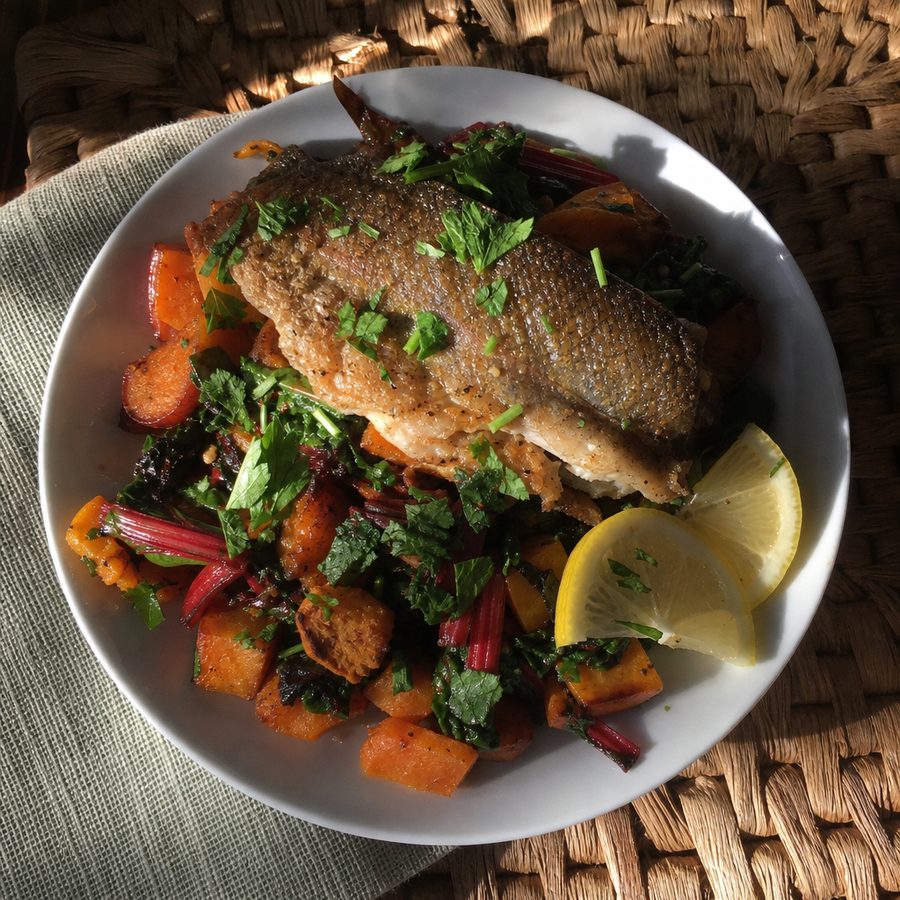
Pan-seared trout laid over garlicky wilted swiss chard and tender golden sweet potato, finished with a squeeze of lemon and a slick of good olive oil.
Why You'll Love This Recipe
Real food at the table, rather than a bowl of something sweet. Trout, sweet potato, and swiss chard give you protein, gentle starch, and greens on one plate, and the whole thing leans on a single skillet and a handful of ingredients you can keep on hand. It is elegant enough to feel like a treat but simple enough to pull off on an ordinary morning.
The plate works because each component is cooked in the same pan in sequence, so the flavors build. Covering the sweet potato traps steam and lets the cubes turn tender before they take on color, while a brief turn with garlic wilts the chard without cooking it to mush. Searing the trout skin-side down in a hot pan gives you a crisp, golden crust and browned flavor, and the final squeeze of lemon lifts the richness of the fish and the earthiness of the greens.
The textures are all different and the plate holds you. The trout is rich and flaky, the sweet potato is soft and mildly sweet, and the chard adds a slightly bitter, mineral edge that keeps the plate from feeling heavy. Protein and fiber together make it a filling start that holds you through the morning, and the olive oil and lemon tie it into something that tastes considered rather than thrown together.
Ingredients
- 4 trout fillets (about 440 g total)
- 1 large sweet potato, diced
- 5 cups swiss chard, chopped
- 3 cloves garlic, minced
- 1 tbsp lemon juice
- 3 tbsp olive oil
- 1 tsp salt
Instructions
- Prep the vegetables and aromatics: Scrub the sweet potato, peel if you like, and dice it into even half-inch cubes so it cooks through at the same rate. Rinse the swiss chard well, stack the leaves, and roughly chop stems and leaves together. Peel and mince the garlic. Have the lemon and olive oil within reach, since the trout comes together quickly at the end.
- Cook the sweet potato: Heat a portion of the olive oil in a wide skillet over medium heat. Add the diced sweet potato, sprinkle with a little of the salt, and cover, because the trapped steam cooks the cubes through before their edges can catch. Cook, stirring once or twice, until the cubes are fork-tender and lightly golden at the edges, about 10 minutes. Transfer to a plate and set aside.
- Wilt the chard: Return the skillet to medium heat and add the minced garlic and the chopped swiss chard with a pinch of the salt. Cook, tossing with tongs, until the leaves collapse and turn glossy and the stems soften, 3 to 4 minutes. If the pan looks dry, add a splash of water to help the stems steam. Transfer to the plate with the sweet potato.
- Sear the trout: Pat the trout fillets dry with a paper towel and season both sides with the remaining salt. Add the rest of the olive oil to the skillet and raise the heat to medium-high. Lay the fillets in skin-side down and give them room, since a crowded pan drops in temperature and the skin will steam rather than crisp, and cook undisturbed until the underside is golden and crisp, about 3 minutes. Flip gently with a thin spatula and cook the second side until the flesh is opaque and flakes easily when nudged, about 3 minutes more.
- Plate and finish: Divide the swiss chard and sweet potato among warm plates, rewarming them in the pan for a moment if they have cooled. Set a trout fillet on top of each, spoon over any pan juices, and finish with a squeeze of fresh lemon juice just before serving.
Variations
- Swap the greens: Trade the swiss chard for chopped kale, spinach, or beet greens. Kale needs a minute or two longer to soften, while spinach wilts almost instantly, so adjust the time at the stove accordingly.
- Different fish: Use salmon, arctic char, or another skin-on fillet in place of the trout. Thicker fillets like salmon will need an extra minute or two per side to reach an opaque, flaky center.
- Herb finish: Add fresh chopped dill, parsley, or chives over the plated fish. Fresh herbs brighten the whole dish and play especially well with the lemon.
- Roots instead of sweet potato: Swap the sweet potato for diced butternut squash or parsnip. Both cook to a similar tenderness under a lid, though parsnip turns sweeter and softer, so check it a little early.
- Citrus swap: Finish with a squeeze of orange or a splash of apple cider vinegar in place of the lemon. Orange leans sweeter against the greens, while vinegar gives a sharper, more savory lift.
Storage & Leftovers
Store leftovers in an airtight container in the refrigerator for up to three days. Keep the trout separate from the vegetables if you can, since the fish holds its texture better on its own and the chard can weep a little liquid as it sits.
To reheat, warm the vegetables in a skillet over medium heat with a few drops of olive oil until heated through, then add the trout for the last minute just to take the chill off. Gentle, brief heat keeps the fish from drying out and going tough; a microwave works in a pinch but will soften the crisp skin.
To get ahead, dice the sweet potato and chop the chard and garlic the night before and refrigerate them in separate containers. You can even cook the sweet potato and chard fully, then simply sear the trout fresh in the morning so it goes to the table hot and crisp.
Notes & Tips
- Buy trout with the skin on: Skin-on fillets hold together far better in the pan and crisp up into the best part of the dish. Ask the fishmonger to leave the skin on and to pull any pin bones, or run your fingers along the fillet and tweeze out any you feel.
- Dry the fish before it hits the pan: Patting the fillets dry is the single biggest thing standing between you and a golden, crisp surface. Surface moisture steams instead of browns, so a quick blot with a paper towel makes a real difference.
- Cut the sweet potato evenly: Uniform half-inch cubes cook at the same rate, so you avoid a mix of raw centers and mushy edges. Test one piece with the tip of a knife before you move on to the greens.
- Use the chard stems, do not toss them: The colorful stems are edible and add a pleasant crunch. Just chop them a little smaller than the leaves and add them at the same time so they have room to soften.
- Season the water the greens release: Taste the chard before it leaves the pan and adjust the salt then. Greens can take a surprising amount of seasoning, and it is easier to correct in the pan than on the plate.
- Serve it hot off the heat: This plate is at its best the moment the trout comes out of the pan, while the skin is still crisp. Warm your plates and have the vegetables ready so everything meets the table at once.
Nutrition & Mindful Eating
- Three things share the pan here and each keeps its own character. The sweet potato goes soft and caramelized, the chard collapses into something dark and mineral, and the trout sits over both, rich enough to tie them together.
- Sweet potato cut small browns at the edges and turns almost candied in the oil, and the orange running through it is beta-carotene, arriving with the sweetness rather than apart from it.
- Swiss chard goes in in two stages, the stems first for their crunch and the leaves after, and it wilts into a dark, faintly bitter tangle that carries magnesium and potassium and stands up to the sweetness of the potato.
- Trout cooks through fast and flakes at the touch of a fork, and its oiliness is the reason this plate satisfies in the morning, bringing omega-3 fats and protein to a breakfast built mostly around vegetables.
- Garlic goes into the hot oil just before the greens so it perfumes them rather than burning, and the lemon at the end wakes the whole plate up, cutting the sweetness of the potato and the richness of the fish in one squeeze.
- As you eat, look for the moment the sweet potato and the chard land in the same bite, and give the plate the time it wants so the morning starts with you sitting down.
Frequently Asked Questions
How do I know when the trout is done?
The flesh turns from translucent to opaque and flakes easily when you nudge it with a fork. Trout cooks fast, so start checking after about three minutes per side; if it resists flaking, give it another moment.
Can I use frozen trout?
Yes. Thaw it fully in the refrigerator overnight, then pat it very dry before seasoning. Trapped moisture from freezing will keep the skin from crisping, so the drying step matters even more with previously frozen fish.
My chard tastes bitter. What can I do?
A pinch more salt and the final squeeze of lemon both tame the natural bitterness of the greens. Cooking the stems until they are fully tender also mellows the flavor, so give them the full few minutes in the pan.
Can I make this for a crowd ahead of time?
Cook the sweet potato and chard in advance and keep them refrigerated, then sear the trout fresh just before serving. The vegetables reheat gladly, but the fish is best straight from the pan while the skin is still crisp.