
Tuna Deviled Eggs
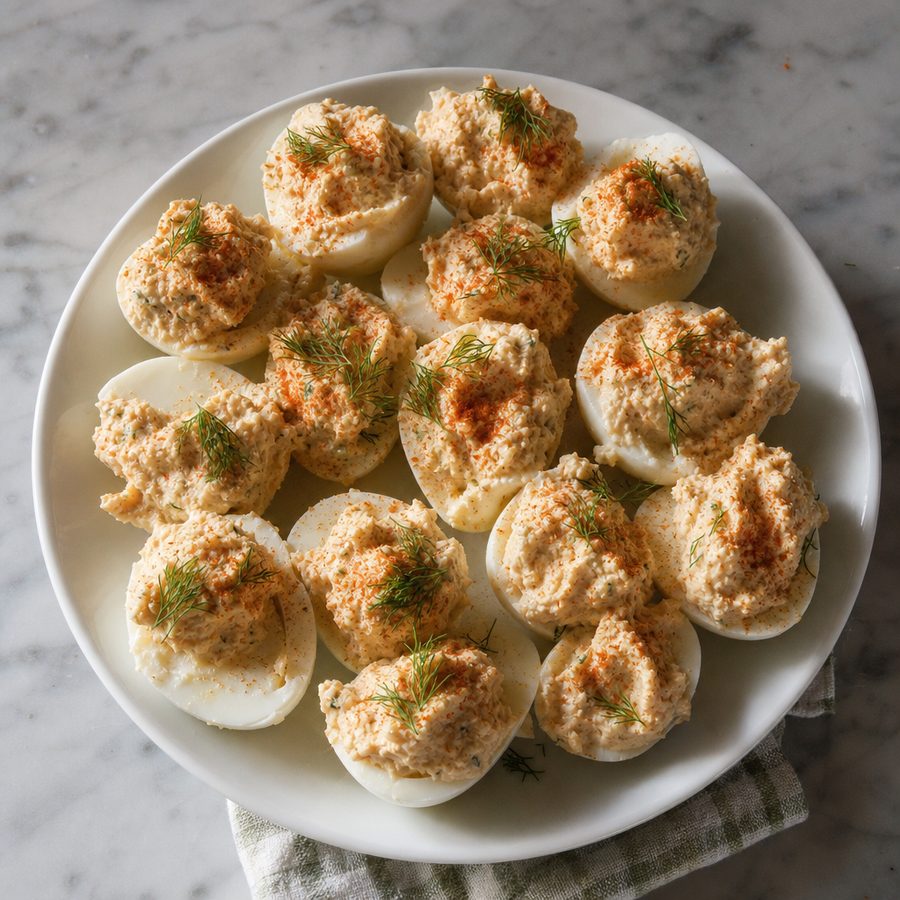
Halved hard-boiled eggs filled with a creamy mash of their own yolks, flaked tuna, tangy Greek yogurt, Dijon, lemon, and chives, finished with a dusting of paprika.
Why You'll Love This Recipe
These are the familiar deviled eggs of any potluck table, rebuilt so that each two-bite half carries real staying power. Folding flaked tuna into the yolk mash turns a light nibble into something substantial, and the whole thing comes together with a bowl, a fork, and a pot of water. They suit anyone who wants a savory, hand-held snack that eats like a small meal, and they travel well to a desk lunch or a party platter.
Rich yolks need something sharp standing opposite them. Greek yogurt stands in for much of the usual mayonnaise, keeping the filling creamy while adding a gentle tang. Dijon and lemon juice cut through the fat and wake up the tuna, and draining the tuna thoroughly is what keeps the filling thick enough to mound or pipe rather than slump. Chives add a mild onion note and flecks of color.
Textures that vary bite to bite, and protein concentrated from both the eggs and the tuna, which is what makes a small portion filling. The yogurt and Dijon keep each bite creamy without feeling heavy, and the paprika on top adds a whisper of warmth and a bit of visual appeal. It is the kind of snack that quiets an afternoon craving without leaving you sluggish.
Ingredients
- 8 large eggs
- 8 oz tuna in water, drained
- 1/3 cup Greek yogurt
- 2 tsp Dijon mustard
- 2 tsp lemon juice
- 2 tbsp chopped chives
- 1/2 tsp paprika
- 1/4 tsp salt
Instructions
- Boil the eggs: Place the eggs in a single layer in a saucepan and cover with cold water by about an inch. Bring to a rolling boil over high heat, then hard-boil for 12 minutes. While they cook, fill a bowl with ice water.
- Cool and peel: Transfer the eggs straight into the ice water and let them sit until fully cold, about 10 minutes. Gently tap each egg all over, then peel under a thin stream of cool running water, which helps the shell slip free cleanly.
- Halve and separate: Slice each egg in half lengthwise. Pop the yolks out into a mixing bowl and set the whites aside on a plate, hollow side up.
- Prep the filling ingredients: Drain the tuna well, pressing it against the lid or a sieve to remove excess water so the filling does not turn watery. Finely chop the chives.
- Mash the filling: To the yolks add the drained tuna, Greek yogurt, Dijon mustard, lemon juice, chives, and salt. Mash with a fork, breaking up the tuna and yolks, until the mixture is smooth, creamy, and spreadable.
- Fill the whites: Spoon the filling into the hollow of each egg white half, mounding it slightly. For a neater look, load the filling into a piping bag or a zip-top bag with one corner snipped off and pipe it in.
- Finish and serve: Dust the filled eggs evenly with paprika and serve chilled.
Variations
- Extra tang: Stir a spoonful of finely chopped dill pickle or a splash of pickle brine into the filling for a sharper, brinier bite.
- Smoky heat: Swap the paprika for smoked paprika and add a pinch of cayenne to the filling for gentle warmth and a smoky finish.
- Herb forward: Fold in chopped fresh dill or parsley along with the chives for a greener, more herbal filling.
- Everything topping: Sprinkle everything bagel seasoning over the finished eggs in place of, or alongside, the paprika for extra crunch and savor. This adds sesame and poppy seeds.
- Avocado cream: Mash a few tablespoons of ripe avocado into the filling for a silkier, richer texture and a boost of green color.
Storage & Leftovers
Store the filled eggs in an airtight container in the refrigerator, where they keep well for up to two days. Lay them in a single layer so the filling does not smear, and keep them cold until just before serving.
These are meant to be eaten chilled and do not need reheating; warming them would make the whites rubbery and the yogurt-based filling loose. If they have been out at a gathering, return them to the refrigerator promptly and discard any left at room temperature for more than two hours.
To make ahead, boil, peel, and halve the eggs and mix the filling up to a day in advance, storing the whites and filling separately in the refrigerator. Keeping the filling in a piping bag means you can pipe and dust with paprika just before serving so the eggs look and taste freshly made.
Notes & Tips
- Use older eggs: Eggs that are a week or two past purchase peel far more cleanly than very fresh ones, whose shells cling to the white. If you know you will make these, buy the eggs a bit ahead.
- Drain the tuna hard: Press the tuna firmly in a sieve or against the can lid before mixing. Excess water is the main reason a filling turns runny and refuses to hold its shape.
- Pick the right tuna: Chunk light tuna in water gives a milder flavor and softer flake, while albacore is firmer and more pronounced. Either works; choose the one you like eating on its own.
- Taste before filling: The saltiness of canned tuna varies by brand, so taste the mashed filling and adjust the salt and lemon before you fill the whites, when it is still easy to fix.
- Level the whites: If a few egg white halves wobble, cut a very thin slice off the rounded bottom so each one sits flat and steady on the platter.
- Serve with something crisp: A few cucumber rounds, celery sticks, or cherry tomatoes alongside add crunch and freshness that plays off the creamy filling.
Nutrition & Mindful Eating
- Yolk, tuna and yogurt go into the same bowl and come out as one filling. The yolk brings the fatty richness, the tuna makes it savory and gives it grain, and the yogurt loosens it enough to pipe.
- Eggs boiled to the point where the yolk is set but still golden are what this stands on, the firm white holding its shape as a cup while the yolk carries choline and a good share of the protein.
- Tuna flaked fine disappears into the filling and leaves savoriness behind rather than pieces, turning a couple of eggs into a snack with real protein and the omega-3 fats fish bring with them.
- Greek yogurt and dijon are the seasoning as much as the binder, one tangy and thick, the other sharp and warm, and together they keep the filling from tasting only of yolk.
- Paprika dusted over the top is not there only for looks. It brings a faint sweet smokiness that reaches you before the filling does, and the chives and lemon give the finish its green snap and its lift.
- As you eat, take each half in two bites rather than one so the cool filling and the firm white register separately, and notice how quickly a few of these settle a hungry stretch.
Frequently Asked Questions
Can I make these without any mayonnaise?
Yes. This filling uses Greek yogurt, Dijon, and lemon juice for creaminess and tang, so no mayonnaise is needed at all. If you prefer, you can replace some of the yogurt with mayonnaise for a richer result.
How do I keep the filling from being watery?
The most important step is draining the tuna thoroughly, pressing out as much liquid as you can before mixing. Mashing everything until smooth and chilling the filled eggs also help it firm up and hold its shape.
What kind of tuna works best?
Tuna packed in water, drained well, keeps the filling from getting oily. Chunk light is milder and softer, while albacore is firmer and stronger in flavor. Both work, so pick the one you enjoy.
Can I make these the day before a party?
Yes. Boil, peel, and halve the eggs and mix the filling up to a day ahead, storing the whites and filling separately in the refrigerator, then fill and dust with paprika shortly before serving so they look freshly made.