
Tuna and Plantain Breakfast Fritters
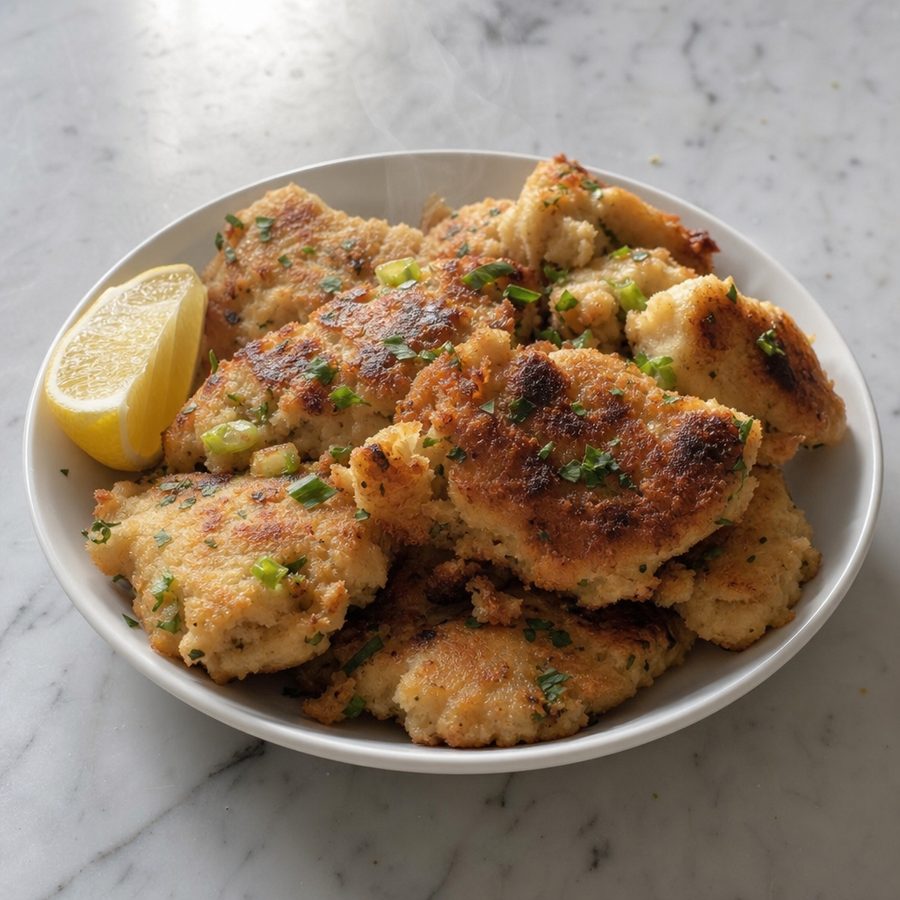
Savory pan-fried fritters of flaked canned tuna bound with mashed green plantain and brightened by minced scallion, fresh parsley, and a squeeze of lemon.
Why You'll Love This Recipe
These are hearty, hand-held fritters built for a savory start to the day, and they suit anyone who wants a warm, protein-forward breakfast without eggs, bread, or dairy. Canned tuna and green plantain are both inexpensive pantry staples, so the dish comes together from things you can keep on hand and turns them into something that eats like a real meal rather than a snack.
The trick is the green plantain, which is starchy rather than sweet, so when it is boiled and mashed while still warm it turns tacky and sticky enough to bind the flaked tuna into a patty that holds its shape in the pan, no egg or flour required. Frying in olive oil over steady medium heat gives the outside a deep golden, slightly crisp crust while the inside stays tender, and the lemon juice and scallion cut through the richness of the fish so each bite tastes fresh.
A serving delivers a generous amount of protein from the tuna alongside the filling starch and fiber of the plantain, a combination that keeps you satisfied through the morning. Parsley and scallion add a green, herbal lift and a dose of vitamins, while the olive oil contributes heart-friendly fats. It is a plate that feels substantial and clean at once, savory and warm without being heavy.
Ingredients
- 3 cans tuna in water, drained
- 2 green plantains, boiled and mashed
- 4 scallions, minced
- 1/4 cup parsley, chopped
- 1 tbsp lemon juice
- 3 tbsp olive oil, for frying
- 3/4 tsp salt
Instructions
- Boil and mash the plantains: Cut the ends off the green plantains and score the skin lengthwise along a ridge with the tip of a knife, then peel away the thick skin in sections; green plantain skin is tight, so use the knife to pry it if it resists. Cut the flesh into thick chunks and boil in salted water until fork-tender, about 15 to 20 minutes. Drain well and mash smooth with a potato masher or fork, then set aside to cool until just warm.
- Prep the tuna and aromatics: Open the cans of tuna and drain off the water thoroughly, pressing the tuna against the lid to squeeze out as much liquid as you can so the fritters hold together. Flake it apart with a fork. Trim and mince the scallions, using both white and green parts, and finely chop the parsley.
- Mix the batter: In a bowl, combine the drained tuna, mashed plantain, minced scallion, chopped parsley, lemon juice, and salt. Stir and press with a spoon until the mixture is cohesive and holds together when squeezed; the warm plantain acts as the binder, so work it in well.
- Shape the fritters: Scoop up portions of the mixture and form into small, even patties about three-quarters of an inch thick, pressing firmly between your palms so they stay compact and do not crack at the edges.
- Pan-fry: Heat the olive oil in a skillet over medium heat until it shimmers. Add the fritters in a single layer without crowding and cook undisturbed for 3 to 4 minutes, until the underside is deep golden and releases easily from the pan. Flip once and cook the second side another 3 to 4 minutes until golden and heated through.
- Serve: Transfer the fritters to a plate lined with paper towel to drain briefly, then serve warm with fresh lemon wedges for squeezing over the top.
Variations
- Fresh dill and cilantro: Swap some or all of the parsley for chopped dill or cilantro for a brighter, more aromatic herb profile that pairs naturally with the fish.
- Garlic and ginger: Work a little grated garlic and fresh ginger into the mixture for a warmer, more savory depth without changing the makeup of the dish.
- Salmon swap: Use canned salmon in place of the tuna for a richer, more pronounced flavor and softer texture; this swaps in a different fish.
- Briny olive: Fold in finely chopped pitted green or black olives for a salty, briny bite; this adds olives, so ease back on the added salt to taste.
- Lime and coconut: Use lime juice in place of the lemon and fry in coconut oil instead of olive oil for a subtly tropical version; this adds coconut.
Storage & Leftovers
Store cooled fritters in an airtight container in the refrigerator, where they keep well for up to three days. Let them cool completely before sealing so trapped steam does not soften the crust.
To reheat and bring back the crisp exterior, warm them in a dry or lightly oiled skillet over medium heat for a couple of minutes per side rather than the microwave, which leaves them soft. They are also good at room temperature if you are packing them to go.
For make-ahead ease, boil and mash the plantain and mix the full batter a day in advance, then keep it covered in the fridge and shape and fry the fritters fresh when you want them; you can also fry a double batch and freeze the extras in a single layer, then reheat straight from frozen in a skillet.
Notes & Tips
- Choose fully green plantains: Pick plantains that are hard and solid green with no yellow patches; these are starchy and neutral, which is what binds the fritters. A plantain that has started to yellow is sweeter and softer and will not hold as firmly.
- Drain the tuna hard: Excess water is the main reason fritters fall apart. Press the tuna firmly against the can lid and let it sit a moment to shed liquid before mixing, and pour off any pooled water in the bowl.
- Mash while warm: Green plantain gets stickier and easier to mash smooth when it is still warm from boiling. If it cools and stiffens before you mix, its binding power drops, so mix the batter while the plantain is warm.
- Test one fritter first: Fry a single test patty before committing the whole batch. If it slumps or breaks, work in a little more mashed plantain; if it tastes flat, adjust the salt and lemon before shaping the rest.
- Do not crowd the pan: Leave space between fritters so they sear rather than steam, and resist flipping early; wait until the underside is deep golden and lets go of the pan on its own for a clean, crisp crust.
- Serve alongside: These are good with a crisp green salad, sliced avocado, or a spoon of mashed avocado on top, and a wedge of lemon on the side keeps every bite bright.
Nutrition & Mindful Eating
- Plantain and tuna are the whole batter. The mashed plantain is starchy enough to bind everything on its own, the tuna gives it savor and substance, and the two fry into a patty that is crisp outside and tender in the center.
- Green plantain boils down into a pale, starchy mash that tastes more like potato than fruit, faintly sweet at most, and it carries resistant starch and potassium in with that starchy body.
- Tuna folded through the batter turns up as savory flakes inside each fritter, and it brings the protein and omega-3 fats that let a breakfast of fritters hold you until lunch.
- Scallion and parsley go in raw and stay green through the frying, dotting the inside of every fritter, and that sharp allium bite is what keeps a fried food tasting fresh.
- The oil has to be hot enough that the edges go lacy and brown within a minute, and a squeeze of lemon over them straight out of the pan is what makes them taste bright rather than only of the frying.
- As you eat, let the crackle at the edge and the soft give in the middle land as two separate things, and take them one at a time off the plate so you can tell where satisfied begins.
Frequently Asked Questions
Can I use ripe yellow plantains instead of green ones?
It is best to stick with hard green plantains. Ripe yellow or black-spotted plantains are sweet and soft, and they will not bind the tuna the way starchy green plantain does, so the fritters turn mushy and tend to fall apart. Green is what gives you a patty that holds and fries up crisp.
Does it matter if my tuna is packed in water or oil?
Use tuna packed in water for this recipe. It drains cleaner and lets the plantain and olive oil carry the texture and richness. Oil-packed tuna adds extra moisture and fat that can make the mixture greasy and looser, and it is harder to squeeze dry.
My fritters keep breaking apart in the pan. What went wrong?
This almost always comes down to moisture or handling. Make sure the tuna is very well drained and the plantain is mashed smooth and mixed in while warm so it binds. Press each patty firmly when shaping, and let the first side cook fully to a deep golden before you flip, since a set crust holds together where an early flip tears.
Can I bake these instead of pan-frying?
You can, though you lose some of the crisp crust that the skillet gives. Arrange the shaped patties on a lined baking sheet, brush both sides with the olive oil, and bake in a hot oven, flipping once halfway, until golden and firm. The pan method stays my preference for texture.