
Tuna and Tomato Baked Breakfast Eggs
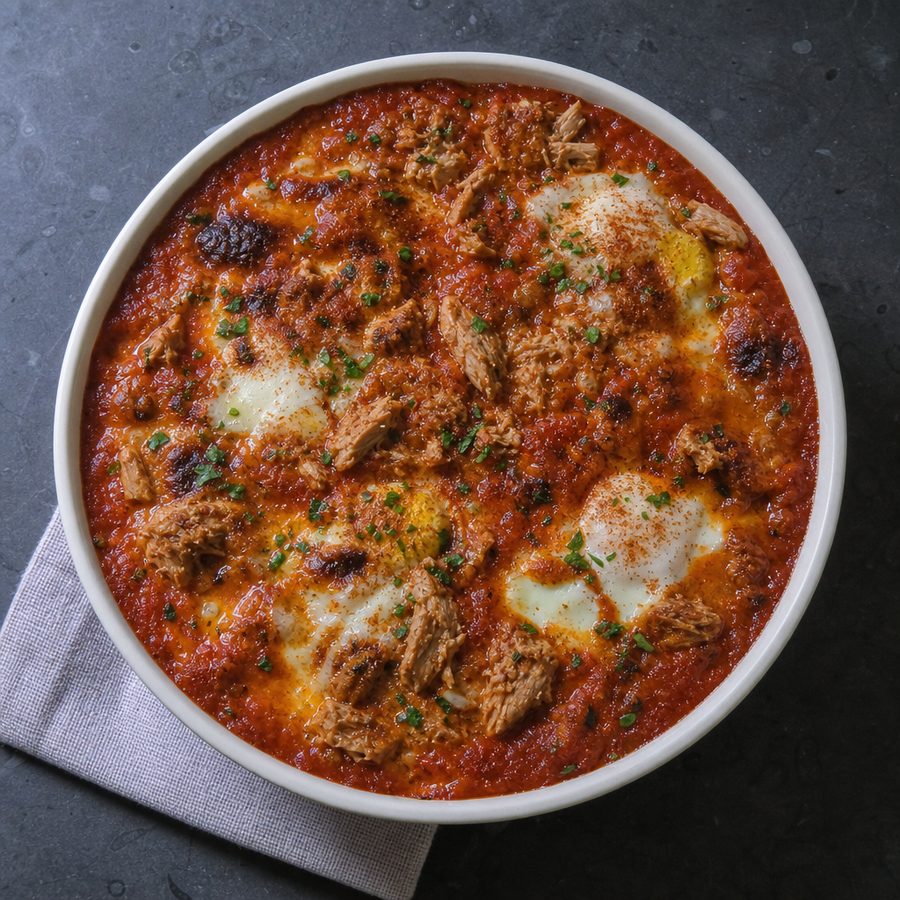
Eggs baked into a garlicky tomato and tuna sauce with sweet red bell pepper, onion, and paprika, finished with fresh parsley and served straight from the pan.
Why You'll Love This Recipe
More substantial than toast or cereal, without spending the morning cooking. Eggs settle into a rich tomato sauce studded with flaked tuna and sweet bell pepper, so a single skillet carries the whole meal. It suits people who are trying to eat more seafood, who want a filling start to the day, or who simply like a hot, spoonable breakfast they can share around the table.
Onion, pepper, garlic, and paprika all go in before the tomatoes. Softening the onion, pepper, and garlic in olive oil with paprika first draws out their sweetness and blooms the spice so its flavor spreads through the oil before the tomatoes go in. Simmering the crushed tomatoes with the tuna long enough to thicken concentrates the flavor and keeps the sauce from weeping around the eggs. Cracking the eggs into shallow wells and covering the pan traps steam, which cooks the tops of the whites gently while the sauce below sets the bottoms, so you get set whites and soft yolks without flipping.
Protein comes from both the eggs and the tuna, which keeps you full for hours, while the tomatoes, pepper, onion, and parsley add fiber, color, and brightness. The runny yolk enriches the sauce as you break into it, olive oil rounds everything out, and a spoonful over each portion feels hearty without being heavy. It is the kind of breakfast that steadies you through a long morning.
Ingredients
- 3 cans tuna in water (about 480 g), drained
- 8 large eggs
- 1 1/2 cups crushed tomatoes
- 1 red bell pepper, diced
- 1 onion, diced
- 3 cloves garlic, minced
- 2 tbsp olive oil
- 2 tsp paprika
- 3 tbsp parsley, chopped
- 1/4 tsp salt
Instructions
- Prep the vegetables and tuna: Dice the onion and the red bell pepper into small pieces, mince the garlic, and roughly chop the parsley; keep the parsley aside for the end. Open the cans of tuna, drain off the water well, and flake the tuna apart with a fork.
- Soften the aromatics: Warm the olive oil in a large skillet over medium heat. Add the onion, bell pepper, and garlic along with the paprika, and cook, stirring now and then, until the vegetables are soft and the onion turns translucent, about 6 minutes, because the paprika needs those few minutes in warm oil to give up its color and lose its raw edge.
- Build the sauce: Stir in the crushed tomatoes, the flaked tuna, and the salt. Bring to a gentle simmer and cook, stirring occasionally, until the sauce thickens slightly and no longer looks watery, about 5 minutes. Spread the sauce into an even layer so that every egg sits at the same depth and they all finish at the same moment.
- Add the eggs: Using the back of a spoon, press a well into the sauce for each egg, spacing them out. Crack one egg into each well. Cover the skillet with a lid and cook over low heat until the whites are fully set and opaque but the yolks are still soft, 6 to 8 minutes. For firmer yolks, cook a minute or two longer.
- Garnish and serve: Sprinkle the chopped parsley over the top and serve straight from the pan while hot.
Variations
- Spicy: Add a pinch of red pepper flakes or a chopped fresh chili with the onion and pepper for a gentle heat that plays off the sweet paprika.
- Smoky: Swap the sweet paprika for smoked paprika to give the sauce a deeper, campfire-like flavor without changing anything else.
- Greens: Stir a few handfuls of baby spinach into the sauce just before making the wells and let it wilt down for extra color and fiber.
- Briny bite: Scatter a few chopped olives or capers over the sauce before adding the eggs for a salty, tangy contrast; taste before adding more salt, since both are already salty.
- Creamy finish: Crumble a little feta over the top with the parsley at the end; this adds dairy and a salty, creamy note that softens the acidity of the tomatoes.
Storage & Leftovers
Keep leftovers in an airtight container in the refrigerator for up to three days. The sauce holds up well, though the yolks will continue to firm as they sit, so fully cooked leftovers keep best.
Reheat gently in a covered skillet or saucepan over low heat until warmed through, adding a splash of water if the sauce has thickened too much. A microwave is quicker, but stop as soon as it is hot. Eggs turn rubbery the second you overshoot.
To get ahead, make the tomato and tuna sauce a few days in advance and refrigerate it on its own. In the morning, rewarm the sauce in the skillet, make the wells, add the eggs, and cook covered until the whites set.
Notes & Tips
- Drain the tuna well: Press the flaked tuna against the lid or a sieve to squeeze out as much water as you can, so it does not thin the sauce or make it watery around the eggs.
- Pick your tuna: Either chunk light or albacore works here; chunk light flakes into finer pieces that spread evenly through the sauce, while albacore stays in meatier chunks if you prefer more texture.
- Watch the whites, not the clock: The eggs are done when the whites are fully opaque with no clear, jiggly patches; give the pan a gentle shake and the yolks should wobble while the whites stay put.
- Use a lid that fits: A snug lid or even a sheet of foil is what steams the tops of the eggs; without it the whites stay slippery on top no matter how long the bottoms cook.
- Season at the end: Both the tuna and the tomatoes carry salt, so taste the sauce before adding more and adjust once it has simmered and concentrated.
- Serve with something to scoop: A slice of crusty bread or a warm flatbread on the side is the easiest way to catch the yolk and sauce; it turns the dish into a fuller meal.
Nutrition & Mindful Eating
- The sauce, the tuna and the eggs are one thing here rather than three. Tomatoes cook down with onion and garlic into something thick enough to hold a well, the tuna goes in savory and flaky, and the eggs set right in it.
- Crushed tomatoes are the body of the dish, going sweeter and rounder the longer they sit over the heat, and the lycopene in them becomes easier for your body to take up once it has cooked in olive oil.
- The eggs are what make it breakfast. Covered and cooked just until the whites are firm, the yolks stay soft enough to break into the sauce, and they bring protein along with the choline and lutein that live in the yolk.
- Onion, garlic and bell pepper are the base underneath everything, softened slowly in the oil until they are sweet, and they feed the bacteria in your gut while they are at it.
- Paprika stirred into the hot oil turns the sauce a deeper red and gives it a low smoky note, and the parsley scattered over at the end is the fresh, grassy thing that lands last.
- As you eat, spoon straight from the skillet and take in the garlic and paprika in the steam, letting each soft bite of yolk and sauce register before the next so you can tell when you have had enough.
Frequently Asked Questions
Can I use fresh tomatoes instead of crushed?
Yes. Use ripe, peeled tomatoes chopped small and simmer them a little longer so they break down into a sauce; you may need to cook off the extra liquid until it thickens the way crushed tomatoes would.
My egg whites set but the yolks were already hard. How do I keep them runny?
Keep the heat low and covered, and start checking at the six-minute mark. The whites set from the outside in, so pull the pan as soon as the whites turn opaque; the residual heat will finish them while the yolks stay soft.
Can I make this for just one or two people instead of the whole pan?
Yes. Use a smaller skillet and scale the sauce down, then make only as many wells as you need. Any extra sauce keeps well in the fridge for another morning.
What can I serve alongside to make it a bigger meal?
Crusty bread, a warm flatbread, or a simple green salad all pair well. Bread is especially good for scooping up the yolk and tomato sauce.