
Turmeric Salmon With Cauliflower and Greens
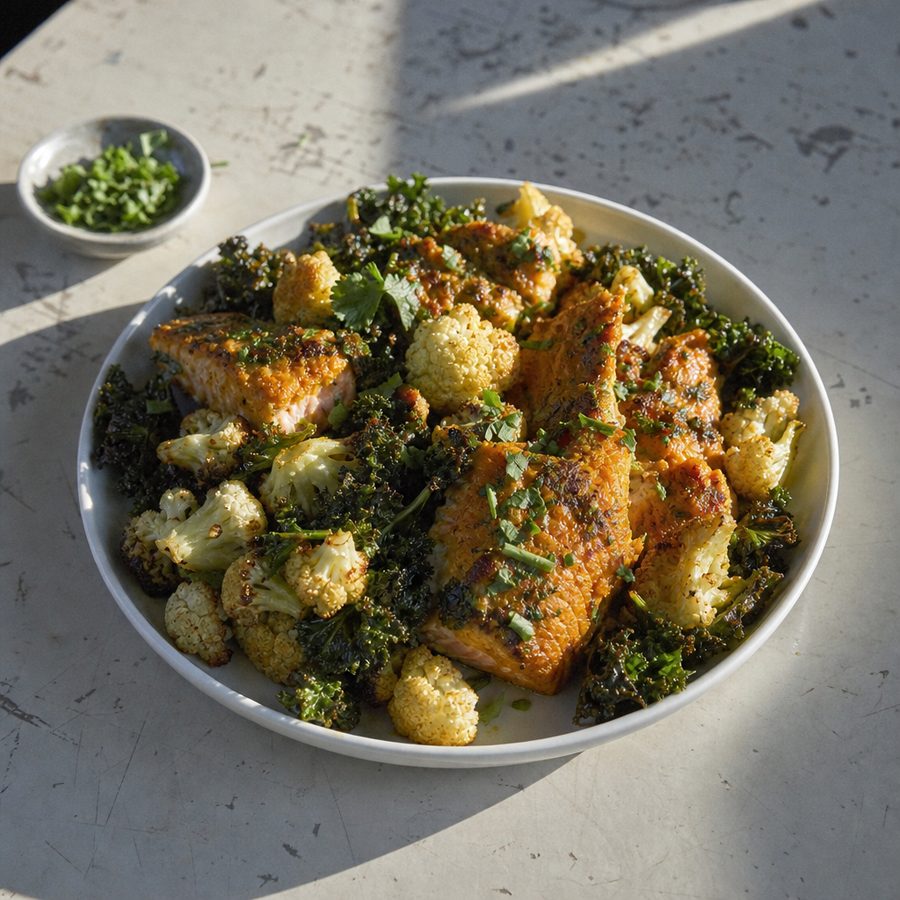
Turmeric-rubbed salmon roasts alongside golden cauliflower and kale in one pan, giving you a warmly spiced Mediterranean dinner that stays low in carbs and rich in flavor.
Why You'll Love This Recipe
This is a good dinner for anyone who wants something warm and a little different without a complicated recipe. If you already like salmon, the turmeric gives it an earthy, golden edge that keeps things interesting. It suits busy nights because it all roasts on one pan, and it is forgiving enough that you do not need to hover. Cook it once and it becomes an easy answer for the nights you have no plan.
Roasting brings out the sweetness in the cauliflower and crisps the edges of the kale while the salmon stays moist in the middle. Salmon is one of the best sources of omega-3 fats, tied to a calmer inflammatory response, and turmeric supplies curcumin, a compound long studied for the same reason. Olive oil helps carry both the curcumin and the fish's fats, while cauliflower and kale add fiber and vitamin C. The lemon and garlic keep it all balanced.
What brings it home is how hearty it feels for such a simple plate. The salmon is rich and tender, the cauliflower turns nutty at the edges, and the kale crisps into something you want to keep picking at. Between the protein in the fish and plenty of healthy fat, it holds you over for a long stretch. The warm turmeric ties every bite together, so it tastes considered even though it asks very little of you.
Ingredients
- 1 1/4 lb salmon fillets
- 1 head cauliflower
- 5 cups chopped kale
- 2 tsp turmeric
- 4 cloves garlic
- 3 tbsp olive oil
- 2 tbsp lemon juice
- 1/2 tsp salt
Instructions
- Heat the oven: Heat your oven to 425°F (220°C) and line a large sheet pan with parchment so the vegetables and the salmon lift off without sticking. The high heat matters here, since a cooler oven only steams the cauliflower pale instead of browning its edges.
- Make the turmeric oil: Stir together the olive oil, turmeric, minced garlic, lemon juice, and salt in a small bowl until it turns deep gold. Mix it into the oil rather than sprinkling the turmeric straight over the pan, because turmeric gives up its color and its flavor to fat and barely at all to anything else.
- Roast the cauliflower: Toss the cauliflower florets with about half the turmeric oil until every piece is coated, spread them across the pan in a single layer, and roast for 15 minutes. Give them that head start, since cauliflower takes roughly twice as long as salmon to come good.
- Add greens and salmon: Toss the kale with a little of the remaining oil, then push the cauliflower out toward the sides, scatter the kale around the edges of the pan, and set the salmon in the cleared center. Keep the kale at the outside, because it crisps fastest where the pan runs hottest.
- Roast the salmon: Brush the last of the turmeric oil over the salmon and roast for 8 to 10 minutes, until it reaches 125 to 130°F (52 to 54°C) at the thickest part and flakes gently under a fork. Check the thin end of the fillet first, since it always finishes ahead of the rest.
- Rest and serve: Let the salmon rest for 2 to 3 minutes before you move it, so the juices settle back into the fish rather than running out across the pan. Serve it with the crisp kale and the golden cauliflower alongside.
Variations
- Swap the fish: Trout or arctic char take well to the turmeric oil; roast until they flake at about 145°F (63°C) rather than the lower salmon range.
- Add chickpeas: Roast a small handful of chickpeas with the cauliflower for extra texture, keeping in mind it adds a few carbs per serving and, as a legume, takes the plate off the autoimmune protocol.
- Change the green: Use chopped chard or collards in place of kale, giving sturdier leaves a couple of extra minutes to soften.
- Add warmth: Stir a pinch of black pepper and cumin into the turmeric oil for a deeper, more savory spice profile; both are seed spices that the autoimmune protocol leaves out.
- Brighten it: Finish with a spoonful of plain yogurt thinned with lemon for a cool, tangy contrast to the warm spice, or unsweetened coconut yogurt to keep it dairy-free and on the autoimmune protocol.
Storage & Leftovers
Let everything cool, then pack the salmon and vegetables into an airtight container. Stored in the fridge, they keep for up to three days. The kale will lose some of its crispness over time, but the flavor holds, and the turmeric oil keeps the whole dish tasting warm and well seasoned.
To reheat, warm the salmon and vegetables in a 300°F (150°C) oven until just heated through, or enjoy the leftovers cold over greens for an easy lunch. Skip the microwave if you can, since it tends to overcook the salmon and leave it dry rather than tender.
Cooked salmon freezes better than most fish, so you can wrap individual portions and freeze them for up to a month. The cauliflower and kale soften once thawed, so I would freeze only the salmon and roast fresh vegetables when you plan to serve it again.
Notes & Tips
- Bloom the turmeric: I mix the turmeric into the oil first so it dissolves and coats evenly instead of leaving dusty spots on the fish.
- Dry the cauliflower: Pat the florets dry before tossing them in oil so they roast to golden edges rather than steaming.
- Give kale room: Spread the kale in a thin layer so it crisps; crowding it just makes it wilt and go limp.
- Pull salmon early: I take the salmon out at 125°F (52°C) because it keeps cooking as it rests and stays silky rather than dry.
- Mind turmeric stains: Turmeric stains cutting boards and cloths, so I wipe up spills quickly and use a spoon to handle the oil.
- Match your florets: Cut the cauliflower into even pieces so they finish roasting at the same time without any raw or scorched bits.
Nutrition & Mindful Eating
- Salmon, cauliflower and kale roast together and trade with each other. The fish releases its fat into the pan, the cauliflower catches it and browns, and the kale goes papery at the tips where the heat reaches it first.
- Salmon is rich, soft and forgiving, flaking apart the moment it is done, and the omega-3 fats that make it taste that way are the same ones it is best known for.
- Cauliflower roasted at high heat goes sweet and nutty at the cut edges, nothing like the pale steamed version, and it brings fiber and vitamin C along with all that browning.
- Kale roasts into two textures at once, crisp at the edges and still soft down at the stem, and the garlic tossed with it turns toasty and sweet in the oil rather than sharp.
- Lemon whisked into the turmeric oil is what pulls the plate together, and a dinner like this holds you well into the evening, with the protein and fat in the salmon doing most of that work.
- As you eat, watch how easily the salmon flakes and listen for the crisp kale against it, and let the lemon and the warmth slow you down enough to register when you have had enough.
Frequently Asked Questions
Can I use a different fish?
Yes. Trout or arctic char work well with the turmeric oil; just cook them a little longer, until they flake at about 145°F (63°C) instead of salmon's lower range.
My salmon came out dry. What went wrong?
It likely cooked too long. Pull salmon at 125 to 130°F (52 to 54°C), since it continues cooking as it rests and dries out quickly past that point.
Can I make this ahead?
You can mix the turmeric oil and cut the cauliflower a day early, then roast at dinnertime. Leftover salmon keeps three days and is great cold over greens the next day.
Is there any starch on the plate?
None. It is fish and vegetables the whole way through, and the protein and healthy fat are what make it a full dinner rather than a light one.