
Tuscan White Bean Rosemary Stew
A rustic stew of creamy cannellini beans simmered with rosemary, crushed tomatoes, kale, carrots, celery, and garlic, brightened with lemon and spooned over olive-oil-toasted whole wheat bread.
Why You'll Love This Recipe
This is a warming, one-pot dinner for anyone who wants something hearty and plant-forward without a long ingredient list or fussy technique. It leans on humble pantry staples, cannellini beans and canned tomatoes, and turns them into a stew that feels rustic and generous. It suits busy weeknights when you want a bowl of real food, and it is forgiving enough for a beginner cook to get right the first time.
Mash some of the beans against the side of the pot. Cannellini beans are soft and starchy, and pressing a portion of them against the pot releases that starch into the broth, thickening it into a creamy base without any dairy or flour. Building a foundation of slowly softened onion, carrot and celery gives the stew its savory depth, the rosemary and garlic carry a woodsy, aromatic note, and a final squeeze of lemon lifts everything so it tastes bright rather than heavy.
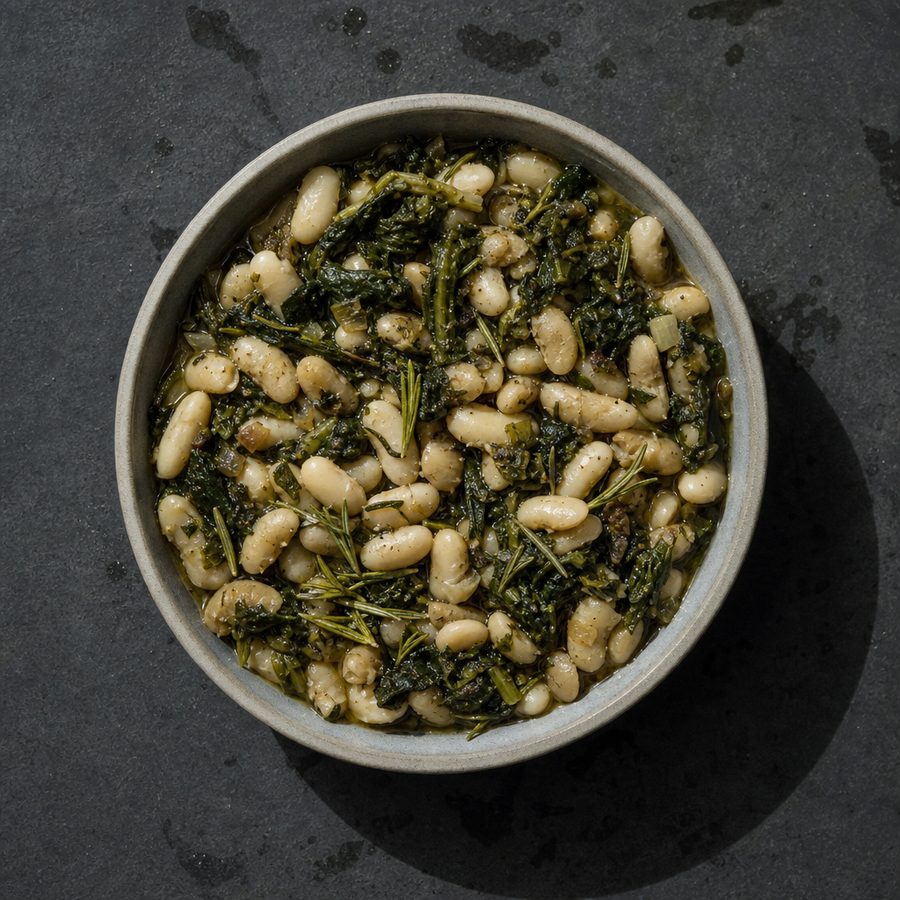
Creamy beans, tender greens, sweet softened vegetables, and crisp toast underneath that soaks up all of the broth. The beans bring plant protein and fiber that make the bowl filling, the kale adds a mineral-rich green freshness, and olive oil rounds it all with a smooth, savory richness. It is the kind of meal that feels comforting and grounding while still leaving you feeling light.
Ingredients
- 3 3/4 cups cannellini beans, drained
- 1 1/4 cups crushed tomatoes
- 4 cups chopped kale
- 2 carrots, diced
- 2 celery stalks, diced
- 1 onion, diced
- 5 cloves garlic, minced
- 2 tsp chopped rosemary
- 4 tbsp olive oil
- 4 slices whole wheat bread, toasted
- 2 tbsp lemon juice
Instructions
- Prep the vegetables: Dice the onion, carrots and celery into small, even pieces so they cook at the same rate. Peel and mince the garlic. Strip the rosemary leaves from their stems and finely chop them. Pull the kale leaves off their tough center ribs and roughly chop the leaves. Drain the cannellini beans in a colander and rinse them under cool running water until the foam is gone, then let them drain.
- Build the aromatic base: Warm the olive oil in a large pot or Dutch oven over medium heat. Add the onion, carrots and celery and cook, stirring now and then, until the onion is translucent and the vegetables have softened, about 8 minutes. Add the minced garlic and chopped rosemary and cook until fragrant, about 1 minute, stirring so the garlic does not brown.
- Simmer the beans: Add the drained beans and crushed tomatoes, then pour in enough water to make it soupy and stir to combine. Bring to a gentle simmer and cook, uncovered, for 15 minutes. Partway through, use the back of a wooden spoon or a potato masher to press some of the beans against the side of the pot; this releases their starch and thickens the broth into something creamy while leaving plenty of whole beans.
- Add the greens: Stir in the chopped kale, a handful at a time so it fits, and cook until the leaves are tender and deep green, about 6 minutes. Add a splash more water if the stew looks too thick.
- Toast the bread: While the kale cooks, toast the whole wheat bread until golden and crisp at the edges, either in a toaster or under a broiler. If you like, brush the warm slices lightly with a little olive oil.
- Finish and serve: Turn off the heat and stir in the lemon juice. Taste and adjust the lemon so the flavor is bright, since the canned beans have already salted the pot. Set a slice of toast in each bowl and ladle the stew over or alongside it.
Variations
- Spicy arrabbiata note: Add a pinch of crushed red pepper flakes with the garlic for a gentle, building heat that plays against the creamy beans.
- Swap the greens: Trade the kale for chopped Swiss chard, escarole, or spinach; tender greens like spinach need only a minute or two, so stir them in right at the end.
- Smoky depth: Stir in a spoonful of smoked paprika or a little tomato paste with the aromatics for a richer, smokier broth.
- Rosemary and sage: Add a few chopped fresh sage leaves alongside the rosemary for an earthier, more autumnal herb profile.
- Garlic-rubbed toast: Rub the hot toasted bread with a cut clove of raw garlic before adding it to the bowl for a sharper, more aromatic base under the stew.
Storage & Leftovers
Cooled leftovers keep well in an airtight container in the refrigerator for up to four days. The flavor deepens overnight as the rosemary and garlic settle into the broth, so day two is often even better than day one.
Reheat gently in a saucepan over medium-low heat, stirring occasionally, and add a splash of water because the beans will have soaked up broth and thickened as it sat. A quick squeeze of fresh lemon at the end wakes the flavor back up. Microwaving works. Stir between rounds so the beans warm through and not just the broth. Toast the bread fresh rather than storing it in the stew.
To make ahead, cook the stew through the simmering stage and refrigerate it without the kale and lemon. When you are ready to eat, reheat, stir in the greens until tender, and finish with the lemon and salt so the kale stays bright and the flavor tastes freshly made.
Notes & Tips
- Control the thickness: Mash more beans for a thick, spoon-coating stew or fewer for a brothier bowl; you can always thin it with a splash of water at the end, so err toward thick.
- Rinse the beans well: Draining and rinsing canned beans washes away the cloudy, salty packing liquid, which keeps the broth clean-tasting and lets you control the salt yourself.
- Add the lemon off the heat: Stir the lemon juice in after you turn off the burner; its brightness fades when it boils, and it does the most to lift the flavor when it goes in fresh at the end.
- Use fresh rosemary if you can: Fresh rosemary gives a piney, aromatic lift; if you only have dried, use about half as much and add it earlier with the aromatics so it has time to soften.
- Salt in stages: Because canned beans and tomatoes vary in how salty they are, taste while it cooks and adjust at the very end once the flavors have come together.
- Double the batch: This stew scales and keeps beautifully, so it is worth making extra; the leftovers thicken into an even heartier meal and reheat with just a splash of water.
Nutrition & Mindful Eating
- Beans and tomatoes do the heavy lifting and the vegetables underneath them do the seasoning. Onion, carrot and celery melt in over the long cook, the tomatoes turn jammy, and the beans thicken the pot until it is closer to a stew than a soup.
- White beans hold their shape for most of the cook and then start to collapse, which is exactly what thickens the pot, and the plant protein and fiber that come with them are why something this simple satisfies.
- Fresh rosemary is assertive enough that a sprig or two flavors the whole pot, its piney oils releasing slowly into the olive oil, and it carries aromatic compounds studied for their antioxidant activity.
- A thick slice of whole wheat bread torn into the bowl goes soft at the bottom while staying chewy on top, and a squeeze of lemon over the finished stew sharpens everything the long cook rounded off.
- Kale added toward the end keeps its structure and gives the stew something to bite against, and by then the carrots have gone sweet and soft enough to almost melt on the tongue.
- As you eat, notice the rosemary rising off the bowl and the bread going soft where it meets the broth, and let a stew that cooked slowly be eaten at about the same pace.
Frequently Asked Questions
Can I use dried beans instead of canned?
Yes. Soak dried cannellini beans overnight, then simmer them in unsalted water until fully tender, usually around an hour, and drain before adding them to the stew. Undercooked beans stay firm and will not mash into a creamy broth, so cook them until they are soft all the way through.
My stew turned out too thin. How do I fix it?
Keep simmering it uncovered to reduce the liquid, and mash more of the beans against the side of the pot to release their starch. Both thicken the broth naturally without adding anything.
Do I have to serve it over bread?
No. The toast soaks up the broth and adds a nice crisp texture, but the stew stands on its own in a bowl. It is also good spooned over cooked grains if you want a different base.
The kale seems tough. What am I doing wrong?
Be sure to strip the leaves off their thick center ribs, which stay chewy, and chop the leaves fairly small. Give them the full simmering time until they turn deep green and tender; younger, smaller kale leaves cook faster than large, mature ones.