
Buttered Venison Roast
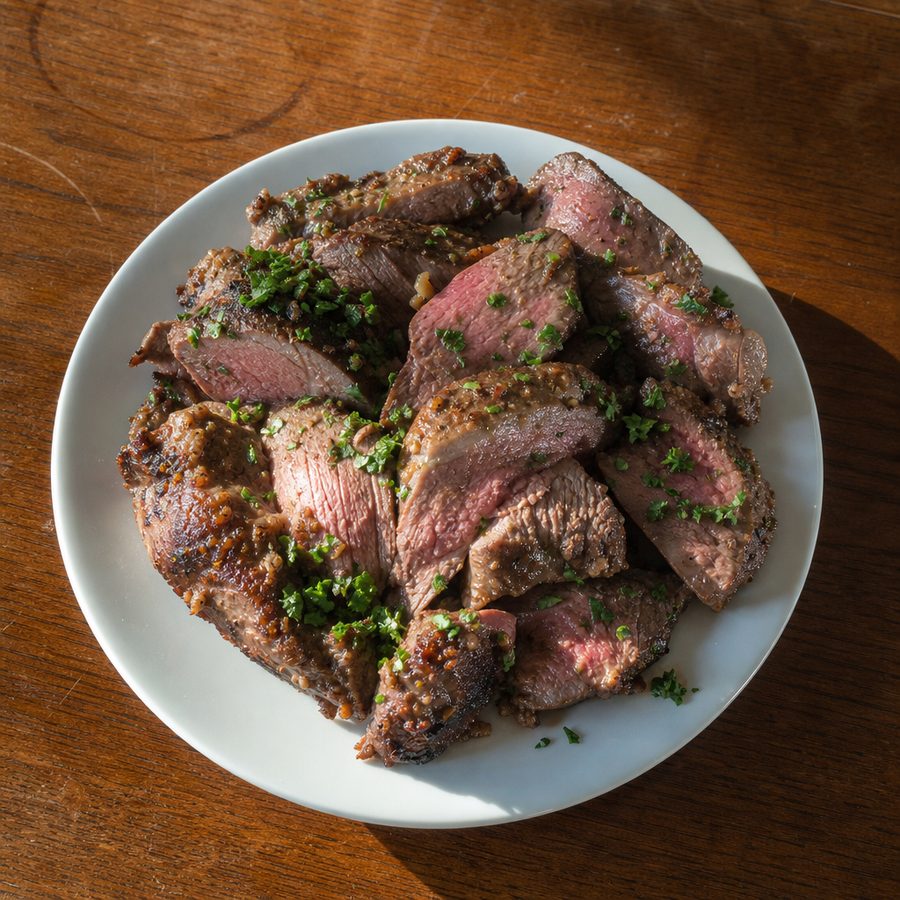
Thin slices of gently roasted venison, seared in butter and finished with the warm, browned pan butter spooned over the top.
Why You'll Love This Recipe
This is a simple, rich dinner built around a cut of red meat that many cooks find intimidating. Venison is prized for its clean, deep flavor, but its low fat content means it punishes overcooking. This recipe is for anyone who wants a hearty, meat-forward centerpiece with almost no ingredients and no fuss, and for hunters or anyone with venison in the freezer looking for a reliable way to cook a roast without drying it out.
Hot to start, gentle to finish. Browning the roast in butter over high heat develops a savory, well-colored crust and the nutty flavor of cooked butter, while the moderate 325°F (163°C) oven brings the interior up slowly and evenly to a rosy medium-rare. Pulling the roast at 130 to 135°F (54 to 57°C) is the key move: venison has so little marbling that a few extra degrees is the difference between tender and tough. Finishing with the pan butter adds back the richness the meat lacks on its own.
The seared exterior runs against the tender, thinly sliced interior underneath, and the silky butter is what carries both of them. Venison delivers a large amount of complete protein along with iron and B vitamins, and the butter contributes fat that makes the meal filling and adds fat-soluble vitamins. It is a straightforward plate of meat and good fat that leaves you full without feeling heavy.
Ingredients
- 2 1/2 lb venison roast
- 5 tbsp butter
- 1 tsp salt
Instructions
- Trim and season: Pat the venison roast dry all over with paper towels. Trim off any silvery membrane on the surface with a sharp knife, since it stays tough when cooked. Rub the roast on all sides with salt and let it sit on the counter for about 20 minutes to take the chill off, which helps it cook evenly.
- Preheat the oven: Preheat the oven to 325°F (163°C). Set an oven rack in the middle position so the roast sits in the center of the heat.
- Sear in butter: Melt some of the butter in an oven-safe skillet or Dutch oven over medium-high heat until it foams. Lay the roast in the pan and brown it deeply on every side, turning with tongs, about 2 to 3 minutes per side. Good color on the outside builds flavor and gives the roast a savory crust.
- Roast gently: Add the remaining butter to the pan around the roast. Transfer the pan to the oven and roast until an instant-read thermometer inserted into the thickest part of the center reads 130 to 135°F (54 to 57°C) for medium-rare, about 35 minutes. Because venison has so little margin, pull it at this point rather than cooking further, or it will turn dry.
- Rest and serve: Move the roast to a cutting board and let it rest for 10 minutes so the juices settle. Slice thin, cutting across the grain of the muscle for the most tender bite. Spoon the warm pan butter over the slices before serving.
Variations
- Brown butter finish: After the roast comes out, keep cooking the pan butter over medium heat, swirling, until it turns golden and smells nutty, then spoon it over the slices for a deeper, toasted flavor.
- Different cut of meat: The same method works well with a beef, elk, or bison roast in place of the venison; watch the thermometer rather than the clock, since cooking time changes with the size and shape of the cut.
- Cook in a richer fat: Sear and baste in beef tallow or duck fat instead of butter for a different savory note; note that tallow and duck fat are rendered animal fats rather than dairy.
- Hard cheese finish: Grate a hard aged cheese over the warm slices just before serving so it softens into the pan butter; this adds more dairy to the plate.
- Marrow-basted: Roast a few split marrow bones alongside the venison and spoon the soft, melted marrow over the sliced meat for extra richness; this adds beef marrow.
Storage & Leftovers
Store leftover venison in an airtight container in the refrigerator for up to 3 to 4 days. Slicing it thin before storing makes it easy to portion, and keeping some of the pan butter with the meat helps it stay moist.
Venison reheats best gently, since high heat will finish cooking the already-cooked meat and dry it out. Warm the slices in a covered pan over low heat with a little butter, or in a low oven just until heated through. Leftovers are also good served cold, sliced thin.
To get ahead, you can trim and salt the roast a day in advance and keep it uncovered in the refrigerator; the surface dries slightly and browns better when seared. You can also sear the roast, then refrigerate it and finish the oven roasting closer to serving time.
Notes & Tips
- Buy a thermometer: An instant-read thermometer is not optional with venison. The window between perfect medium-rare and dry is narrow, and time alone will not tell you when to pull it; temperature will.
- Pick the right roast: A roast from the hindquarter or a backstrap section stays the most tender. If your cut has a lot of connective tissue or silver skin running through it, it is better braised low and slow than roasted quickly like this.
- Let it warm up first: Taking the roast out of the fridge before cooking helps the center reach temperature before the outside overcooks, giving you a more even, edge-to-edge pink.
- Slice against the grain: Look for the direction the muscle fibers run and cut across them. On venison this matters even more than on beef, because cutting with the grain leaves the slices chewy.
- Save every drop of pan butter: The butter left in the pan carries the browned meat flavor and the salt. Scrape it all out and spoon it over the slices rather than leaving it behind in the skillet.
- Tame the gamey edge: If your venison tastes strong, trimming all the silver skin and surface fat before cooking removes most of what people call gamey, and not overcooking keeps the flavor clean.
Nutrition & Mindful Eating
- Venison, butter and salt are the whole of it, and they work as a set. The meat brings a deep, faintly sweet flavor of its own, the butter gives it something rich to roast in, and the salt draws that flavor up to the surface.
- Venison is a close-grained, fine-textured red meat that slices cleanly and stays rosy in the center, and it carries iron in the form your body absorbs most readily along with the B12 that red meat is known for.
- Butter is what keeps the outside from drying while the roast is in the oven. As it browns in the pan it turns nutty and toasted, and it brings the fat-soluble vitamins A and D that come with real dairy fat.
- Salt goes on early and generously, and that is what pulls moisture to the surface so a crust can form and brown. It is also what keeps a plain roast from tasting flat on the plate.
- Meat this dense holds you for a long stretch. The protein is doing most of that work, along with the fat from the butter, and it is why a few thin slices eat like a whole dinner.
- As you eat, notice the nutty smell of the browned butter and how easily the slices give way against the fork, and let the meal be something you sit down for rather than something you finish standing up.
Frequently Asked Questions
Why do you cook the venison only to 130 to 135°F (54 to 57°C)?
Venison has very little internal fat, so it dries out quickly. Medium-rare keeps it juicy and tender. Cooked much past this, it becomes firm and dry, which is the most common complaint people have about venison roasts.
My roast is a different size than the recipe. How long do I cook it?
Cook to temperature, not time. A larger or thicker roast takes longer and a smaller one less, but the target internal temperature stays the same. Start checking with a thermometer early so you can pull it at the right moment.
How do I keep venison from tasting gamey?
Most of the strong flavor lives in the silver skin and surface fat, so trim those away before cooking. Patting the meat dry and cooking it just to medium-rare also keeps the flavor clean and mild.
Can I make this without an oven?
Yes. After searing, you can lower the heat, cover the pan, and finish the roast on the stovetop over low heat, turning it now and then, until the center reaches 130 to 135°F (54 to 57°C). Watch it closely and rely on your thermometer, since stovetop heat is less even than the oven.