
Venison and Roasted Root Spinach Bowl
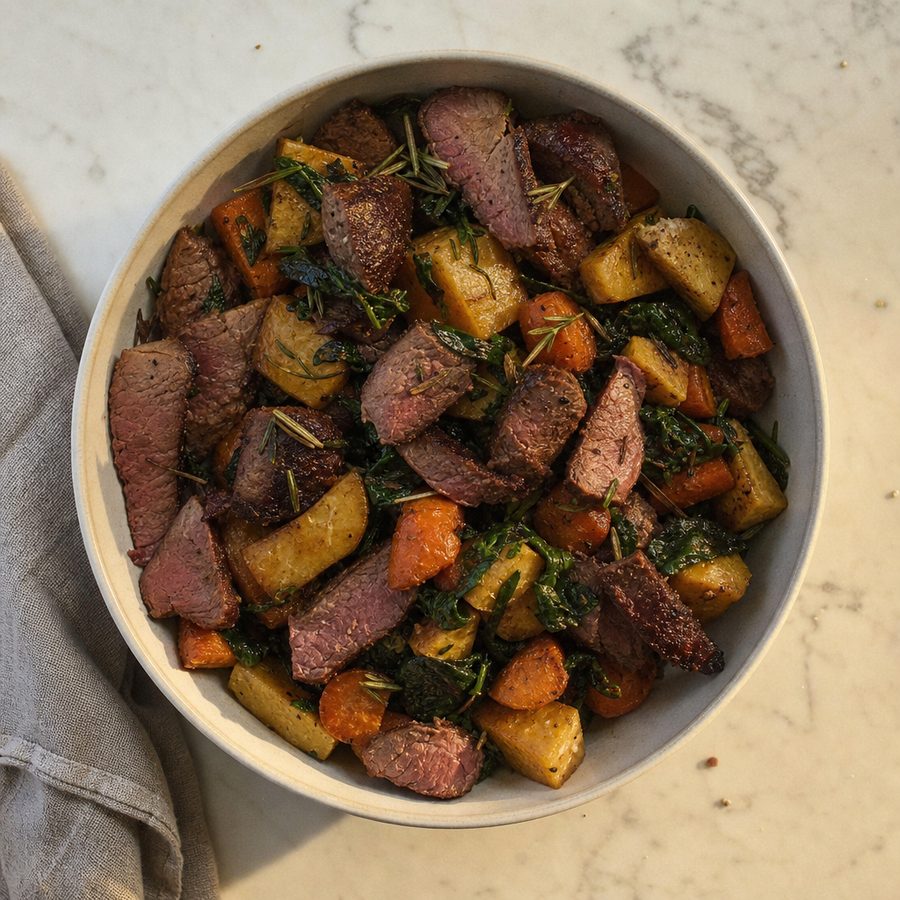
Sliced venison over caramelized roasted rutabaga and carrot, set on garlic-wilted baby spinach and finished with a rosemary-scented balsamic drizzle.
Why You'll Love This Recipe
This is a warm, grounding bowl built around venison, sweet roasted root vegetables, and a tangle of garlicky spinach. It is a good midday meal for anyone who wants something hearty and protein-forward without heaviness, and it leans entirely on whole ingredients, so it suits people cooking around a short, clean list of foods. The flavors are savory and slightly sweet, with rosemary and balsamic tying the plate together.
One plate, and nothing on it matches anything else. Roasting the rutabaga and carrot at a high heat draws out their natural sugars and browns the edges, giving them a caramelized depth that a boiled root never develops. Against that sweetness, the venison stays savory and the balsamic adds a sharp, bright finish, while the spinach is wilted only briefly so it keeps a little body instead of turning to mush. Slicing the venison thinly against the grain shortens the muscle fibers so each bite stays tender.
It satisfies because the venison is rich in protein and iron, which makes the bowl filling in a lasting way, while the roots bring fiber and slow-digesting carbohydrate for steady energy through the afternoon. Spinach adds folate and vitamin K, and the olive oil helps your body absorb the fat-soluble nutrients in the vegetables. Together it eats like comfort food but leaves you feeling clear-headed rather than weighed down.
Ingredients
- 4 cups cooked venison, sliced
- 1 medium rutabaga, diced
- 3 carrots, diced
- 5 cups baby spinach
- 4 tbsp olive oil
- 3 cloves garlic, minced
- 1 tbsp chopped fresh rosemary
- 1 tbsp balsamic vinegar
- 3/4 tsp salt
Instructions
- Roast the roots: Preheat the oven to 425°F (220°C). Peel the rutabaga and carrots, then dice them into even, bite-size cubes so they cook at the same rate. Toss on a rimmed baking sheet with olive oil, the chopped fresh rosemary, and salt, and spread them in a single layer with space between the pieces. Roast until fork-tender and browned at the edges, about 25 minutes, stirring once halfway through so they caramelize evenly.
- Slice the venison and take the chill off it: If your cooked venison is still in one piece, slice it thin against the grain, since cutting across the fibers shortens them and that is what keeps each bite tender rather than stringy. Spread the slices on the board while the roots finish roasting, because meat straight from the refrigerator chills the pan the moment it lands and ends up steaming instead of warming. If you are working from a raw roast instead, sear it in a heavy skillet, cook it to 130 to 135°F (54 to 57°C) for medium-rare, rest it uncovered for five minutes so the juices settle back through it, and add about twenty five minutes to the times above.
- Wilt the spinach: Mince the garlic. In a skillet over medium heat, warm the remaining olive oil and cook the garlic until fragrant and just golden, about 30 seconds, stirring so it does not scorch. Add the baby spinach in handfuls and toss with tongs just until it collapses and turns glossy and bright green, about 1 to 2 minutes. Pull it off the heat before it goes limp and gray.
- Warm the slices through: Wipe the spinach pan out and set it back over low heat with a few drops of the olive oil. Lay the venison in a single layer and turn it once, thirty to forty seconds a side, just until the slices lose their chill and no further. Cooked venison has nothing left in reserve, so a hot pan at this stage only tightens the fibers and dries out what you already have.
- Build the bowls: Divide the roasted roots and the wilted spinach among four bowls and lay the warm venison over the top. Drizzle the balsamic vinegar over everything while the roots are still hot, since that heat is what lifts the sweetness in the vinegar up out of its sharpness and carries it across the bowl. Taste, and add a last pinch of salt only if it asks for one.
Variations
- Swap the roots: Trade the rutabaga for parsnip or turnip, keeping the carrot for color and sweetness. Parsnip roasts a little faster and turns silky, so check it a few minutes early.
- Change the green: Use chopped kale or Swiss chard in place of baby spinach. Both are sturdier, so give them a couple of extra minutes in the pan until the leaves soften and the stems lose their raw crunch.
- Different herb: Swap the rosemary for fresh thyme or sage. Sage leans earthy and pairs especially well with the sweetness of roasted roots, while thyme is more delicate and floral.
- Balsamic reduction finish: Simmer the balsamic vinegar in a small pan until it thickens into a glossy syrup, then drizzle it over the bowl. It clings to the venison and roots and tastes rounder and less sharp.
- Another red meat: Use grass-fed beef or bison in place of the venison; both behave the same way, so cook them to medium-rare and rest before slicing to keep them tender.
Storage & Leftovers
Keep leftovers in an airtight container in the refrigerator for up to three days. Store the venison and roasted roots together, but if you can, keep the wilted spinach in its own small container so it does not weep liquid over everything and go slack.
Reheat gently to protect the venison, which turns tough and dry when it gets hot fast. Warm the roots and venison in a skillet over medium-low heat with a small drizzle of olive oil, or use a covered dish in the oven at a low temperature until just heated through. Add the spinach at the very end so it only warms rather than cooks again, and drizzle fresh balsamic over the top to wake the flavors back up.
To get ahead, roast the rutabaga and carrot and cook the venison up to a couple of days in advance and refrigerate them separately. When it is time to eat, all that is left is wilting the spinach fresh, warming the components, and drizzling the balsamic, which comes together in minutes.
Notes & Tips
- Do not overcook the venison: Venison has almost no marbling running through it to keep it moist, so it goes from tender to tough quickly. Pull it at medium-rare and lean on a thermometer rather than guessing by look.
- Dice the roots evenly: Rutabaga is dense and slower to soften than carrot, so cut it a touch smaller than the carrot pieces. Even sizing means everything finishes roasting at the same time.
- Give the roots room: Crowding the baking sheet traps steam and leaves the vegetables pale and soft instead of browned. Spread them out in one layer, using two sheets if needed, so they caramelize.
- Slice against the grain: Look for the direction of the muscle fibers on the rested venison and cut across them. This shortens the fibers and makes each slice noticeably more tender to chew.
- Watch the garlic: Minced garlic burns fast in hot oil and turns bitter. Add it to a warm, not screaming-hot, pan and move on to the spinach within about thirty seconds, while it is still golden.
- Adjust the finish to taste: Balsamic vinegars vary widely in sweetness and acidity. Start with a light drizzle, taste, and add more if the bowl needs brightness or a pinch more salt if it tastes flat.
Nutrition & Mindful Eating
- The venison, the roasted roots and the spinach each do a different job. The meat gives the bowl its substance, the rutabaga and carrot bring sweetness and body, and the spinach wilts in at the end and cuts through with something green and mineral.
- Venison is a fine-grained meat with a faintly sweet, almost wild flavor that stands up well to rosemary, and it carries iron in the form your body absorbs most readily.
- Rutabaga is the underrated one here. Roasted hard it turns golden and sweet with a peppery edge running underneath, and it brings fiber and slow whole-food carbohydrate that give the bowl a real base.
- Carrots go soft and candy-sweet at the edges in a hot oven, much deeper in flavor than they are raw, and the beta-carotene behind that orange color is something your body turns into vitamin A.
- Rosemary, garlic and a splash of balsamic vinegar tie the pan together. The rosemary goes woodsy and toasted, the garlic softens and sweetens, and the vinegar lifts the whole bowl right at the finish.
- As you eat, take in the caramelized smell of the roots and the rosemary before the first forkful, then go slowly enough to catch the contrast between the tender meat and the soft, sweet vegetables underneath.
Frequently Asked Questions
What cut of venison works best here?
A tender cut like backstrap or loin is ideal because it stays juicy at medium-rare and slices cleanly. A leg or shoulder roast also works well; just cook it to medium-rare, rest it, and slice thinly against the grain so it does not eat tough.
My venison tastes gamey. How do I mellow it?
Pat it very dry and season it just before searing, and be sure not to overcook it, since a gray, well-done piece tastes stronger. The sweet roasted roots and the balsamic drizzle also balance any gaminess with sweetness and acidity.
Can I roast the rutabaga and carrot together on one sheet?
Yes, as long as you cut the rutabaga a little smaller than the carrot to account for its density and give the pieces room to brown. If the pan looks crowded, split them across two sheets so they caramelize instead of steaming.
How do I keep the spinach from turning watery?
Wilt it briefly over medium heat and pull it off the moment it collapses and turns glossy, while it still has some body. If you are storing leftovers, keep the spinach separate so its released moisture does not soak the roots and meat.