
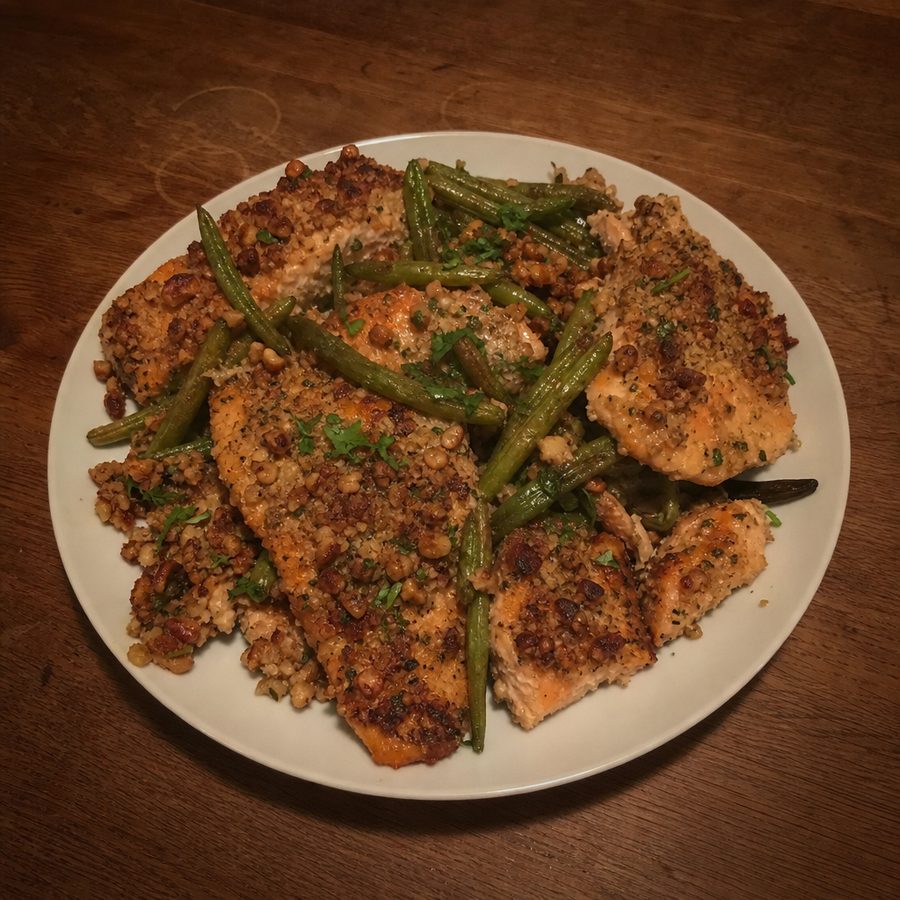
Walnut-Crusted Salmon With Green Beans
Salmon fillets bake under a crisp walnut and Dijon crust alongside garlicky green beans, a hearty low-carb Mediterranean dinner rich in omega-3s and plant fats.
Why You'll Love This Recipe
This is the dinner to reach for when you want something that feels substantial without a pile of starch. It suits cooks who like a hands-off sheet-pan meal, and anyone who wants both fish and nuts working in their favor. If you have felt let down by dry, plain baked salmon before, the walnut crust here is what changes your mind, holding moisture and adding real crunch.
The crust is what makes this work. Walnuts and Dijon form a savory layer that toasts in the oven, sealing the top of the fish so it stays moist while the outside turns crisp and golden. The green beans roast on the same pan, catching the garlic and olive oil, so nothing is wasted. Baking everything together means the flavors mingle without any part overcooking, and cleanup stays down to a single sheet.
It satisfies because it eats like a full, rich meal. The salmon is tender under a crust that crackles, the green beans hold a little snap, and the walnuts add a toasty depth you feel in every bite. With protein and healthy fats doing the heavy lifting, you leave the table content and steady rather than weighed down. It is generous enough for company yet simple enough for a weeknight, which is a rare and useful thing.
Ingredients
- 1 1/4 lb salmon fillets
- 2/3 cup chopped walnuts
- 1 lb green beans
- 1 tbsp dijon
- 3 tbsp olive oil
- 3 cloves garlic
- 1 tbsp lemon juice
- 1/4 cup parsley
- 1/3 tsp salt
Instructions
- Heat the oven and get the prep done: Heat the oven to 400°F (200°C) and line a sheet pan with parchment. Mince the garlic and roughly chop the walnuts and parsley. Chop the walnuts coarse rather than fine, because a crust made of walnut dust bakes into a paste while pieces the size of peas stay crunchy on top of the fish.
- Make the crust into a spreadable paste: Stir the chopped walnuts, Dijon, one minced garlic clove, a tablespoon of the olive oil, and half the parsley together until it holds together as a thick, spreadable paste. The Dijon is the glue: it grips the wet surface of the fish so the crust bakes on rather than sliding off in one piece when you serve it.
- Season the beans and push them to the edges: Trim the green beans, toss them on the sheet pan with a tablespoon of the olive oil, the remaining garlic, and half the salt, then push them out to the edges of the pan. The edges are the hottest part of a sheet pan, so the beans brown properly there while the center stays gentler for the fish.
- Dry the salmon and press the crust on: Pat the salmon dry, set the fillets skin side down in the center of the pan, season with the rest of the salt, and press the walnut mixture evenly over the top. Press firmly rather than spooning it on loosely, so the crust makes contact everywhere and seals the surface of the fish instead of leaving gaps where it dries out.
- Bake 12 to 15 minutes: Bake for 12 to 15 minutes, until the walnuts are golden and smell toasted, the beans are tender with browned spots, and the salmon reads 125 to 130°F (52 to 54°C) at its thickest point. The walnuts are a useful timer of their own, since they go from golden to bitter fairly quickly at this temperature.
- Finish with lemon and oil off the heat: Drizzle everything with the lemon juice and the last tablespoon of olive oil, scatter the remaining parsley over the top, and serve straight from the pan. The lemon goes on at the end because acid added before baking would soften the crust, and raw parsley keeps a green, grassy note that the parsley in the crust has already given up to the oven.
Variations
- Nut swap: Use chopped pecans or almonds in place of walnuts for a slightly sweeter, milder crust.
- Trout version: Spread the crust over trout fillets and bake just until they flake at about 145°F (63°C).
- Herb crust: Fold a little chopped thyme or rosemary into the walnut mixture for a woodsy note.
- Broccoli swap: Trade the green beans for broccoli florets, adjusting the roast time until they are tender.
- Extra tang: Add a second teaspoon of Dijon to the crust for a sharper, more mustard-forward bite.
Storage & Leftovers
Store the salmon and green beans together in an airtight container in the refrigerator for up to three days. The walnut crust will soften as it sits, which is normal, though the flavor holds up well. Let leftovers cool fully before sealing so condensation does not collect in the container.
To bring back some crunch, reheat in a 300°F (150°C) oven or toaster oven rather than the microwave. Warm just until heated through, about eight to ten minutes, so the salmon stays moist. The green beans reheat alongside without fuss. A gentle oven keeps the crust from going soft and the fish from drying.
The cooked salmon freezes reasonably well on its own for up to two months; wrap it tightly and thaw overnight in the refrigerator before reheating. The green beans lose their snap once frozen, so enjoy those fresh. For an easy head start, make the walnut crust a day ahead and keep it chilled.
Notes & Tips
- Chop walnuts fine: I chop the walnuts fairly small so the crust holds together and toasts evenly.
- Press it on: Pressing the crust firmly onto the salmon helps it stay put through baking.
- Single layer beans: I spread the green beans in one layer so they roast and do not steam.
- Pull at 125°F (52°C): I check the salmon at 125°F (52°C), since it climbs a few degrees out of the oven.
- Parchment saves cleanup: Lining the pan with parchment keeps the crust from sticking and makes cleanup quick.
- Fresh parsley twice: I add half the parsley to the crust and save the rest to scatter at the end.
Nutrition & Mindful Eating
- The salmon, the walnut crust and the green beans all roast on one pan, which is why they taste related. The fish stays moist, the nuts toast, and the beans pick up a little of the oil and mustard along the way.
- Salmon is rich, buttery fish that flakes into big soft pieces when it is ready, and the long-chain omega-3 fats behind that richness are among the most studied fats there are.
- Walnuts toast into a crunchy, faintly bitter crust that plays off the sweetness of the fish, and they carry plant omega-3 fats and vitamin E inside that crunch.
- Green beans hold their snap in a hot oven, blistering in spots while staying squeaky at the center, and they bring fiber and vitamin K to the plate along with that bite.
- Dijon mustard, garlic, lemon and parsley do the seasoning. The mustard goes nutty and quiet once it has baked, the garlic sweetens, and the lemon and parsley land at the end so they stay sharp and green.
- As you eat, listen for the crackle of the walnut crust against the fork and notice how the lemon lifts the richness of the fish, and let a few slower bites tell you when you have had enough.
Frequently Asked Questions
Can I swap the walnuts?
Yes. Pecans or almonds work well in the crust; chop them to a similar size so they toast evenly and hold their shape on the fish.
The crust slid off my salmon. What happened?
The fish was likely damp or the crust too loose. Pat the salmon dry, keep the Dijon in the mix as glue, and press the walnuts on firmly before baking.
Can I make components ahead?
Yes. Mix the walnut crust and trim the beans up to a day early and refrigerate, then assemble on the sheet pan and bake when you are ready to eat.
Is there any starch on the plate?
None. The walnut crust stands in for breadcrumbs, and the green beans stand in for a starchy side, so the walnuts and salmon carry plenty of healthy fat between them.