
Baked Zucchini & Feta Fritters
Grated zucchini and crumbled feta bound with egg and almond flour, brightened with grated onion and olive oil, then baked into golden, savory little rounds.
Why You'll Love This Recipe
These baked fritters are for anyone who wants a vegetable-forward snack that eats like comfort food. They turn a glut of summer zucchini into crisp-edged, tender-centered rounds you can eat warm off the pan, pack for lunch, or set out with a dip. Because they bake rather than fry, they come together with almost no hands-on fuss and no splattering skillet, which makes them friendly for a beginner cook or a busy weeknight.
The technique that makes or breaks them is drying the zucchini. Zucchini is mostly water, and wringing that water out in a towel is what lets the fritters brown and hold together instead of steaming into mush. The eggs and almond flour bind everything, the feta melts into salty pockets, and the grated onion seasons the batter from the inside. Baking on a well-oiled, hot pan and flipping once gives you color on both sides without the mess of frying.
They satisfy because they balance real substance with fresh vegetable flavor. The feta and eggs bring protein and richness, the almond flour adds body and a subtle nuttiness, and the zucchini keeps each bite light. That combination of savory, salty, and tender makes them the kind of snack that actually holds you over, not one that leaves you reaching for more twenty minutes later. They keep their edge for a couple of days in the refrigerator, and a few minutes in a hot oven brings the crisp rim straight back.
Ingredients
- 3 zucchini, grated and squeezed dry
- 2 large eggs
- 2/3 cup crumbled feta
- 1/2 cup almond flour
- 2 tbsp grated onion
- 1 tbsp olive oil
- 1/2 tsp sea salt
Instructions
- Preheat and prep the pan: Preheat the oven to 400°F (200°C). Brush a sheet pan generously with the olive oil so the fritters can crisp and release cleanly.
- Grate and dry the zucchini: Trim the ends off the zucchini and grate it on the large holes of a box grater. Pile the shreds into a clean kitchen towel or a few layers of paper towel, gather them up, and wring hard over the sink until no more liquid comes out. This step is essential. Wet zucchini makes soggy fritters that will not set.
- Grate the onion: Grate the onion on the same box grater until you have a loose, juicy pulp, which melts into the batter and seasons it evenly rather than leaving raw crunchy bits.
- Mix the batter: In a large bowl, combine the squeezed zucchini, eggs, crumbled feta, almond flour, grated onion, and sea salt. Stir until the mixture holds together in a loose, scoopable mass. Let it sit a couple of minutes so the almond flour can absorb moisture and firm up.
- Shape the fritters: Scoop mounds of the mixture onto the oiled pan, spacing them apart, and press each one down with the back of the spoon to flatten into a patty about half an inch thick. Even thickness helps them cook at the same rate.
- Bake and flip: Bake for 20 to 24 minutes, carefully flipping each fritter once at the halfway point with a thin spatula, until both sides are golden brown and the centers feel set and springy rather than wet. Let them rest on the pan a couple of minutes to firm up before serving.
Variations
- Herb-flecked: Fold chopped fresh dill, mint, or parsley into the batter for a brighter, more herbaceous flavor that plays off the feta.
- Warm-spiced: Add ground cumin and a pinch of chili flakes for gentle heat and a smoky, earthy edge.
- Lemon and garlic: Stir in finely grated lemon zest and a little minced garlic for a sharper, more aromatic bite.
- Cheese swap: Trade the feta for crumbled goat cheese for a creamier, tangier result; this keeps it dairy-based but shifts the flavor softer.
- Extra green: Wilt and squeeze out chopped spinach and fold it in along with the zucchini for even more vegetable in every fritter.
Storage & Leftovers
Store cooled fritters in an airtight container in the refrigerator, where they keep well for up to four days. Let them cool completely before covering so trapped steam does not soften the crisp edges.
To reheat, lay them on a sheet pan or in a skillet over medium heat rather than the microwave, which turns them limp. A few minutes per side in a hot oven or dry pan brings back the golden exterior and warms them through.
To get ahead, you can grate and wring out the zucchini and mix the batter a day in advance, keeping it covered in the fridge; give it a quick stir before shaping. The fritters also freeze well once baked and cooled. Freeze them in a single layer, then reheat straight from frozen in a hot oven until crisp and heated through.
Notes & Tips
- Wring harder than you think: The single biggest factor is dry zucchini. After the first squeeze, twist the towel again. You will usually get out a surprising second round of liquid, and that is what lets the fritters set and brown.
- Salt the feta, not the batter, heavily: Feta is already salty, so taste a crumb before adding the sea salt. If your feta is very briny, ease off the added salt so the fritters do not turn out sharp.
- Let the batter rest: Giving the mixed batter a couple of minutes lets the almond flour absorb moisture, so it firms up and holds a shape far better when you scoop it.
- Judge doneness by feel: They are ready when both sides are deep golden and the center springs back lightly when pressed instead of feeling wet or jiggly.
- Double the batch: These reheat and freeze so well that it is worth making extra while the oven is on; they are just as good cold from the fridge as a grab-and-go snack.
- Serve with a cool dip: A spoonful of plain yogurt or a garlicky yogurt sauce alongside plays beautifully against the salty, warm fritters and rounds them into a light meal.
Nutrition & Mindful Eating
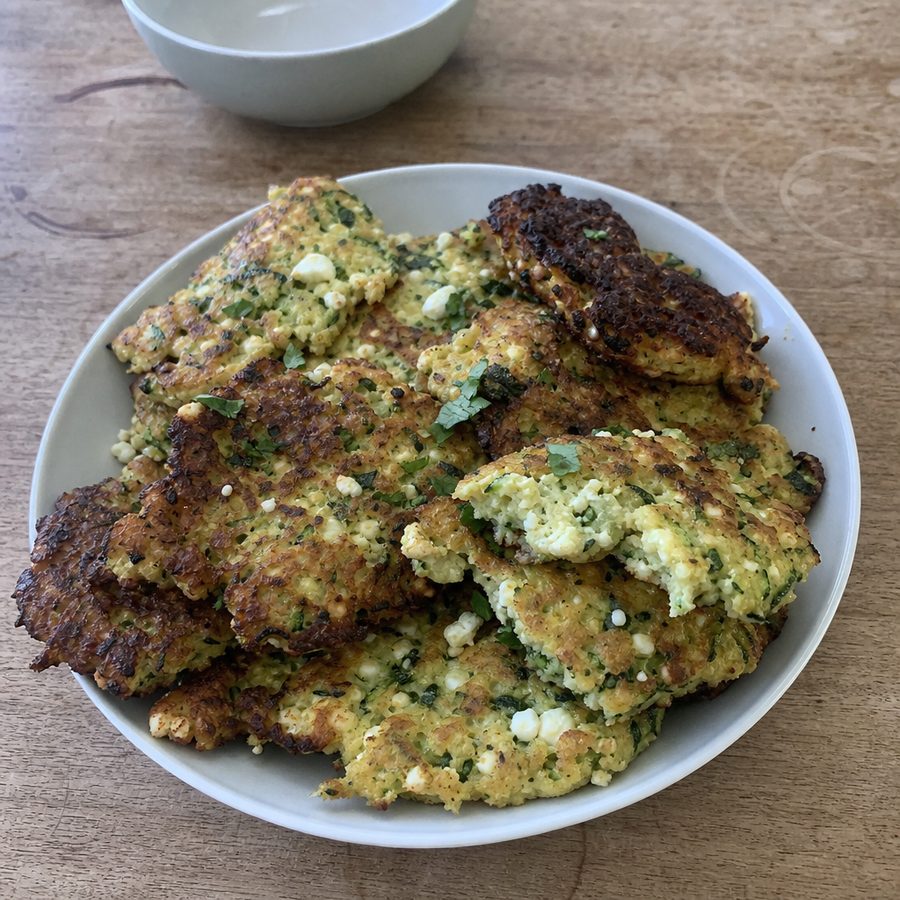
- Zucchini, egg and feta set up together in the oven into something soft-centered with crisp edges. The zucchini keeps the inside moist, the egg holds it all in shape, and the feta seasons the whole mixture from within.
- Feta is what you taste. Briny, tangy and crumbly, it stays in visible white pockets rather than melting away, and each one is a small salty hit against the mild zucchini, bringing calcium and protein with it.
- Grated onion goes in raw and softens completely in the heat, turning sweet and almost disappearing into the batter while leaving its savory depth behind, along with the prebiotic fibers that gut bacteria feed on.
- Almond flour and egg between them decide the texture. The flour keeps things tender and faintly nutty, the egg firms the edges, and their fat and protein are part of why two or three of these sit like a small meal.
- In a hot oven the bottoms take on real color while the tops stay pale and soft, so each fritter has two different textures. Brushed with olive oil first, the edges go golden and just a little crisp.
- As you eat, look for the pockets of feta, notice the crisp underside against the tender top, and let them cool a minute so you actually taste them rather than eating standing at the oven door.
Frequently Asked Questions
Why did my fritters fall apart or turn out mushy?
The usual culprit is zucchini that was not squeezed dry enough. Wring the grated zucchini hard in a towel until no more liquid comes out, and let the mixed batter rest a couple of minutes so the almond flour can firm it up before you shape it.
Can I fry these instead of baking them?
Yes. Warm a thin layer of olive oil in a skillet over medium heat and cook the patties a few minutes per side until golden and set. Baking is used here for a hands-off, lower-mess result, but pan-frying gives a slightly crispier crust.
What can I use instead of almond flour?
Almond flour binds the batter and adds structure. You can swap in another ground nut flour for a similar effect, though this changes the flavor and, of course, keeps the dish nut-based. The key is a dry, absorbent flour that soaks up moisture.
How do I keep the bottoms from sticking to the pan?
Oil the pan well and make sure the oven is fully preheated so the surface is hot when the fritters go on. Let them bake undisturbed until the underside is golden before flipping. They release much more easily once a browned crust has formed.