
Zucchini Feta Gratin
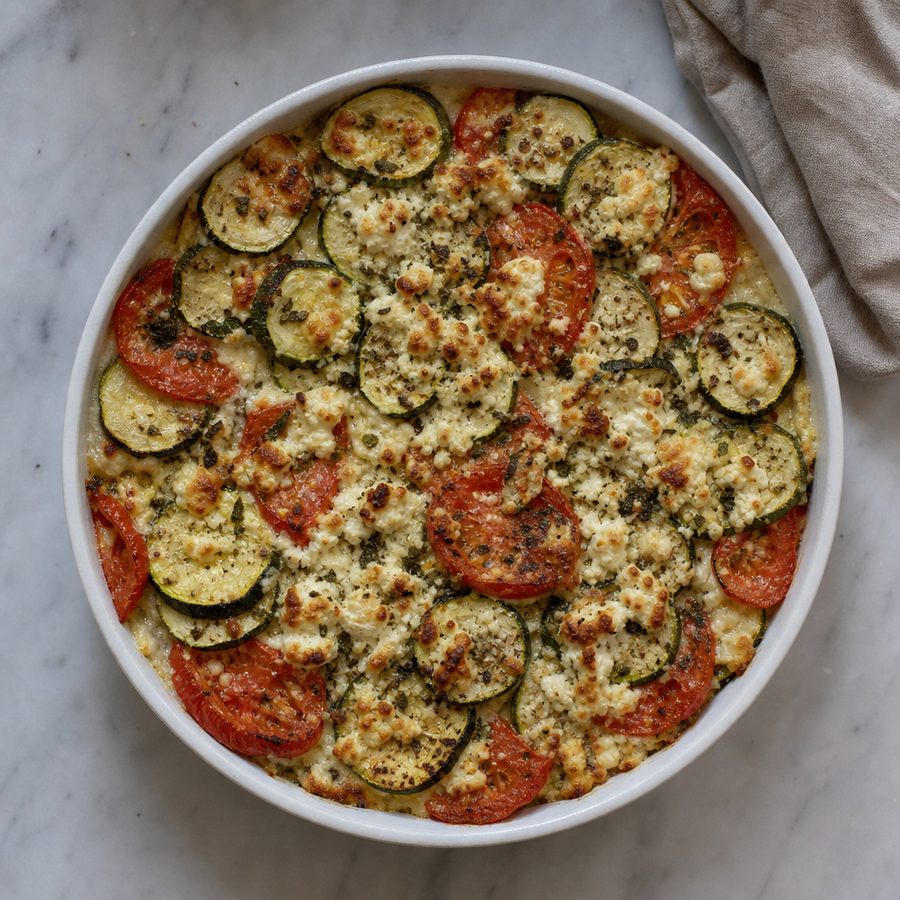
Tender salted zucchini and halved cherry tomatoes layered in a garlicky ricotta and feta custard, baked until golden and set, finished with fresh mint and served over rice.
Why You'll Love This Recipe
This is a bright, vegetable-forward bake for anyone who wants a light dinner that still feels like a real meal. It leans on summer produce and a creamy, herb-flecked custard rather than a heavy cheese sauce or pastry, making it a good weeknight main for a cook who wants something comforting without a lot of richness. Because it comes together in one dish and holds well, it also suits a relaxed dinner where you want the oven to do the work.
Salt the zucchini, then dry it, before anything else. Zucchini is mostly water, and if you skip that step the custard weeps and never sets. Drawing out the moisture first lets the ricotta-and-milk mixture bake into a soft, spoonable custard instead of a soup. Whisking the garlic and oregano straight into that base seasons the dish from within, while the feta on top browns and turns savory in the oven, and the mint stirred in at the very end keeps its fresh, cooling edge.
Creamy, tangy, and fresh in every bite, with just enough substance to feel like dinner. The ricotta and feta bring protein and a rich mouthfeel, the zucchini and tomatoes add fiber and moisture, and the rice underneath turns it into a full plate that keeps you comfortably full. It is filling without being weighty, which is exactly what you want from a warm vegetable bake.
Ingredients
- 3 medium zucchini, sliced
- 1 1/4 cups crumbled feta
- 1 cup ricotta
- 1 1/2 cups cherry tomatoes, halved
- 2 cups cooked white rice, to serve
- 1/2 cup milk
- 4 cloves garlic, minced
- 1 tbsp olive oil
- 1 tsp dried oregano
- 3 tbsp chopped mint
- 1/4 tsp salt
Instructions
- Cook the rice: Rinse the white rice under cold water until the water runs clear. Simmer it in water, covered, until the grains are tender and the liquid is absorbed, about 15 to 18 minutes. Fluff with a fork and keep warm while you build the gratin.
- Draw moisture from the zucchini: Slice the zucchini into rounds about a quarter inch thick. Toss the rounds with a little of the salt and let them sit for 10 minutes so they release their water, then press them dry between clean towels. This step keeps the finished custard from turning watery.
- Prep the aromatics and oven: Halve the cherry tomatoes, mince the garlic, and chop the mint; set the mint aside for the end. Preheat the oven to 400°F (200°C) and brush a baking dish lightly with some of the olive oil.
- Make the custard: Whisk the ricotta, milk, garlic, oregano, and the remaining salt together until smooth and pourable. There are no eggs here, so the ricotta and milk do the setting; whisk well so no lumps remain.
- Layer the gratin: Spread a thin layer of custard across the bottom of the oiled dish. Arrange a layer of zucchini rounds and halved tomatoes, spoon custard over them, and repeat until everything is used, ending with vegetables. Crumble the feta evenly over the top.
- Bake and finish: Drizzle the top with the remaining olive oil and bake, uncovered, until the custard is set and the surface is golden and bubbling at the edges, about 30 minutes. Let it rest a few minutes so it firms up, garnish with the chopped mint, and serve over the warm rice.
Variations
- Swap the greens: Replace some of the zucchini with thin slices of yellow summer squash or eggplant. Salt and dry them the same way, since they hold just as much water.
- Bump the herbs: Trade the mint for chopped fresh basil or dill, or use a mix. Stir it in after baking so the flavor stays bright rather than cooking away.
- Add a little heat: Whisk a pinch of red pepper flakes into the custard, or sprinkle them over the feta before baking, for a gentle warmth against the creamy base.
- Grain swap: Serve it over cooked farro, quinoa, or orzo instead of white rice for a nuttier, chewier base. Farro and orzo add gluten, and orzo also adds gluten from the wheat pasta.
- Extra tang and crunch: Sprinkle a handful of chopped, pitted olives between the vegetable layers, or a few toasted pine nuts over the top after baking. The pine nuts add nuts.
Storage & Leftovers
Refrigerate leftovers in an airtight container once fully cooled. The gratin keeps well for up to four days, and the flavor of the garlic and oregano actually deepens overnight. Store the rice separately if you can, so it does not absorb moisture from the custard.
Reheat individual portions in a 350°F (175°C) oven or toaster oven until warmed through and the top re-crisps, about 15 minutes; a microwave works in a pinch but softens the surface. If the custard looks a little dry, a splash of milk over the top before reheating loosens it back up.
To make ahead, you can assemble the full gratin, cover it, and refrigerate unbaked for up to a day, then bake straight from the fridge, adding a few extra minutes. You can also cook the rice ahead and keep it chilled, reheating with a sprinkle of water so it steams back to fluffy.
Notes & Tips
- Do not skip the drying: The salt-and-press step is the difference between a set custard and a watery one. Take the full 10 minutes and really press the zucchini dry; wet rounds are the most common reason this dish weeps.
- Choose smaller zucchini: Look for firm, slender zucchini rather than large ones. Smaller squash have fewer seeds and less water, so they slice cleanly and bake up tender instead of mushy.
- Pick a good feta: A block of feta stored in brine crumbles better and tastes creamier and tangier than the pre-crumbled tubs, which are often drier. Crumble it yourself just before it goes on top.
- Season the salt to taste: Feta is already salty, so taste your custard before layering. If your feta is very briny, hold back a little of the salt in the custard and let the cheese carry it.
- Judge doneness by the center: The gratin is ready when the middle no longer jiggles like liquid and the top is golden. If the edges brown before the center sets, loosely tent the top with foil for the last few minutes.
- Round out the plate: A simple green salad with lemon or a few slices of gluten-free crusty bread alongside the rice turns this into a fuller dinner and catches every bit of the custard.
Nutrition & Mindful Eating
- Zucchini, ricotta and feta bake into one another here. The zucchini gives up water that the custard takes in, the ricotta goes from grainy to smooth, and by the end the dish holds together well enough to lift out in squares.
- Ricotta is the softness in the middle. Loosened with milk it spreads into every layer and bakes into something between a custard and a cream, carrying calcium and a slow-digesting protein that gives the gratin its weight.
- Feta does the seasoning. Sharp and briny, crumbled between the layers, it cuts through all that softness and leaves salty pockets you come across as you eat, and it brings its own protein and calcium along.
- Zucchini sliced thin collapses into ribbons as it bakes, sweeter than it is raw, and the cherry tomatoes on top split and caramelize at their edges, their lycopene becoming easier to take up in the hot oil.
- Garlic and oregano go into the oil first so they open up before anything else joins them, and the fresh mint stirred in at the end is the surprise, cool and green against a dish this rich.
- As you eat, let it stand until it stops steaming, then take the mint and the browned top together, and notice how a rich dish like this tells you when you have had enough if you give it the time.
Frequently Asked Questions
Why did my gratin turn out watery?
Almost always because the zucchini was not dried enough. Salt the rounds, let them sit the full 10 minutes to pull out moisture, and press them firmly between towels before layering. Very ripe tomatoes can add liquid too, so use firm cherry tomatoes and cut them in halves rather than smaller.
There are no eggs in the custard, so how does it set?
The ricotta and milk thicken and firm up on their own as they bake, giving you a soft, spoonable custard rather than the firm slice you would get from an egg-based one. Whisk them smooth first, and let the finished gratin rest a few minutes out of the oven so it settles before serving.
Can I make this without the rice?
Yes. The gratin stands on its own as a lighter dish, or you can serve it over another gluten-free grain such as rice or quinoa, or with gluten-free bread to soak up the custard. The rice simply turns it into a more filling, complete plate.
How do I know when it is done?
Look for a golden, bubbling top and a center that no longer jiggles like liquid when you nudge the dish. That usually takes about 30 minutes at 400°F (200°C); if the top colors too fast before the middle sets, tent it loosely with foil for the last few minutes.