
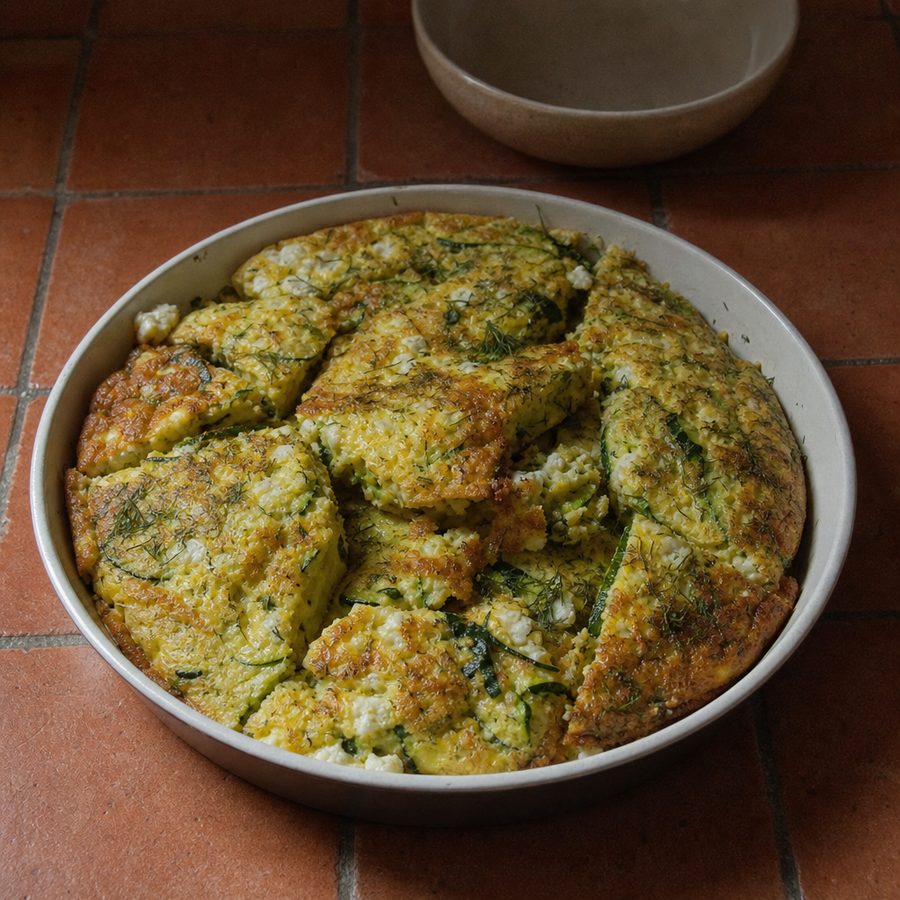
Zucchini and Feta Herb Frittata
A tender baked egg frittata folded with grated zucchini, briny crumbled feta, sliced scallions, and fresh dill, finished with a light richness from olive oil.
Why You'll Love This Recipe
A real breakfast that does not need you standing over the stove every morning. It leans on summer zucchini and fresh dill for freshness and briny feta for depth, and it holds up beautifully in the fridge, so one afternoon of cooking gives you several mornings of ready-to-go food. It suits busy weekday mornings, a relaxed weekend brunch, or a light supper with a green salad.
Wring the grated zucchini out, then cook it down before the eggs go in. Zucchini holds a surprising amount of water, and if you skip those steps the custard turns loose and weepy. Starting the frittata on the stovetop sets the bottom and edges, then finishing it in the oven cooks the center gently and evenly so the eggs stay tender rather than rubbery. Folding the feta into the whisked eggs distributes pockets of salty tang throughout instead of leaving it all on top.
Protein-rich eggs, creamy feta, and the fresh bite of dill and scallion, and all of it is bound in a soft, sliceable custard. The eggs and cheese give it staying power that carries you past mid-morning, while the zucchini adds gentle bulk and moisture without weighing it down. It is rich enough to feel like a treat yet light enough to eat any day of the week.
Ingredients
- 8 large eggs
- 2 medium zucchini, grated and squeezed dry
- 2/3 cup crumbled feta
- 4 scallions, sliced
- 3 tbsp chopped dill
- 2 tbsp olive oil
- 1/4 tsp salt
Instructions
- Preheat and prep the pan: Preheat the oven to 375°F (190°C). Set an oven-safe skillet, such as cast iron or another ovenproof pan, on the stove and warm the olive oil over medium heat until it shimmers.
- Prep the vegetables and herbs: Trim the ends off the zucchini and grate it on the large holes of a box grater. Gather the grated zucchini in a clean kitchen towel and wring it firmly over the sink to squeeze out as much liquid as possible, because a wrung-out zucchini is what keeps the frittata from turning watery. Thinly slice the scallions, using both white and green parts, and finely chop the dill.
- Cook the zucchini and scallions: Add the squeezed zucchini and sliced scallions to the hot skillet. Sauté, stirring often, for about 4 minutes until the vegetables soften and the pan looks dry, since any water left behind will thin the eggs and stop them setting cleanly.
- Whisk the eggs: Crack the eggs into a bowl, add the chopped dill and salt, and whisk until the yolks and whites are fully blended and slightly frothy. Gently fold in the crumbled feta.
- Set the base on the stove: Pour the egg mixture evenly over the zucchini in the skillet and give the pan a gentle shake to distribute. Let it cook undisturbed over medium heat for about 3 minutes, until the edges begin to set while the center is still loose, so that it goes into the oven with a base firm enough to hold its shape.
- Bake until set: Transfer the skillet to the oven and bake for 14 to 16 minutes, until the frittata is puffed, golden, and set in the center with no liquid jiggle when you nudge the pan. Let it cool for a few minutes, then slide it onto a board and cut into wedges.
Variations
- Swap the herb: Trade the dill for chopped mint, parsley, or basil to shift the flavor toward whichever fresh herb you have on hand.
- Add sweet pepper: Sauté diced red bell pepper along with the zucchini for a touch of natural sweetness and color.
- Cheese change: Use crumbled goat cheese in place of the feta for a creamier, milder tang; this keeps it dairy-based.
- Add greens: Stir a handful of chopped spinach or arugula into the pan with the zucchini until it wilts, boosting the vegetable content.
- Warm spice: Whisk a pinch of red pepper flakes or a little smoked paprika into the eggs for gentle heat and a smoky note.
Storage & Leftovers
Store cooled wedges in an airtight container in the refrigerator for up to four days. Pressing a piece of parchment against the cut surfaces helps keep the edges from drying out.
To reheat, warm a wedge in a 300°F (150°C) oven or toaster oven for about 8 to 10 minutes until heated through, which keeps the texture tender. A quick 30-second turn in the microwave also works when you are short on time, though the eggs firm up slightly more.
For make-ahead mornings, bake the whole frittata the night before, cool it completely, and refrigerate it whole or pre-sliced. It is also good cold or at room temperature, so you can pack a wedge straight from the fridge for a portable breakfast or lunch.
Notes & Tips
- Squeeze the zucchini well: The single most important step is wringing the grated zucchini as dry as you can. Excess water is what makes a frittata soggy, so twist it hard in a towel and even give it a second squeeze.
- Choose the right pan: Use a heavy oven-safe skillet like cast iron or a well-seasoned stainless pan. Nonstick makes releasing the wedges easy, but check that the handle is oven-safe at this temperature.
- Do not overbake: Pull the frittata as soon as the center no longer jiggles. Eggs keep cooking from residual heat, and a minute too long turns them dry and spongy.
- Taste your feta: Feta varies from mildly salty to very briny. If yours is on the saltier side, ease back slightly on the added salt so the finished dish stays balanced.
- Double it for the week: This scales well. Bake it in a larger skillet or a baking dish and portion it out for grab-and-go breakfasts through the week.
- Serve it well: A wedge is lovely alongside a simple tomato-and-cucumber salad or a dollop of plain yogurt for a light, complete meal.
Nutrition & Mindful Eating
- Eggs, zucchini and feta each do a different job here. The eggs set into a soft custard, the zucchini keeps that custard tender and juicy, and the feta cuts through the richness with salt and tang, so a slice eats light while still carrying real protein.
- Eggs are what give the frittata its body, firming up just enough to slice while staying creamy in the center, and they bring complete protein along with choline, most of it riding in the yolk.
- Zucchini goes soft and faintly sweet in the pan, giving up some of its water so the custard around it stays tender, and it carries vitamin C and potassium into the middle of every slice.
- Scallions and dill are the flavor of this frittata. The scallions cook down mild and sweet, the dill stays grassy and cool, and the feta softens just enough at the edges to leave salty pockets you keep finding as you eat.
- Olive oil in the pan is what browns the underside and crisps the rim, and the fat helps carry the fat-soluble vitamins out of the eggs and the squash. A wedge of this holds you well into the morning, with the eggs and the cheese doing most of that work.
- As you eat, notice how the browned edge gives more resistance than the soft center, and let the dill and the salty bite of feta slow your fork enough that breakfast feels like a sit-down rather than a hand-off.
Frequently Asked Questions
Why did my frittata turn out watery?
Almost always this comes from zucchini that was not squeezed dry enough. Grate it, then wring it firmly in a clean towel, and be sure to cook it in the pan until the surface looks dry before adding the eggs.
Can I make this without a skillet that goes in the oven?
Yes. Cook the zucchini and set the egg base in any pan on the stovetop, then transfer everything to a greased baking dish and bake until set. It works the same, just add a couple of minutes if the dish is deeper.
How do I know when it is fully cooked?
The center should look puffed and no longer jiggle like liquid when you nudge the pan, and a knife slipped into the middle should come out clean. It will settle slightly as it cools.
Can I freeze the leftovers?
You can. Wrap individual cooled wedges tightly and freeze for up to two months, then thaw overnight in the fridge and rewarm gently. The texture softens a little compared to fresh, but it is still good.