
Zucchini Parmesan Gratin
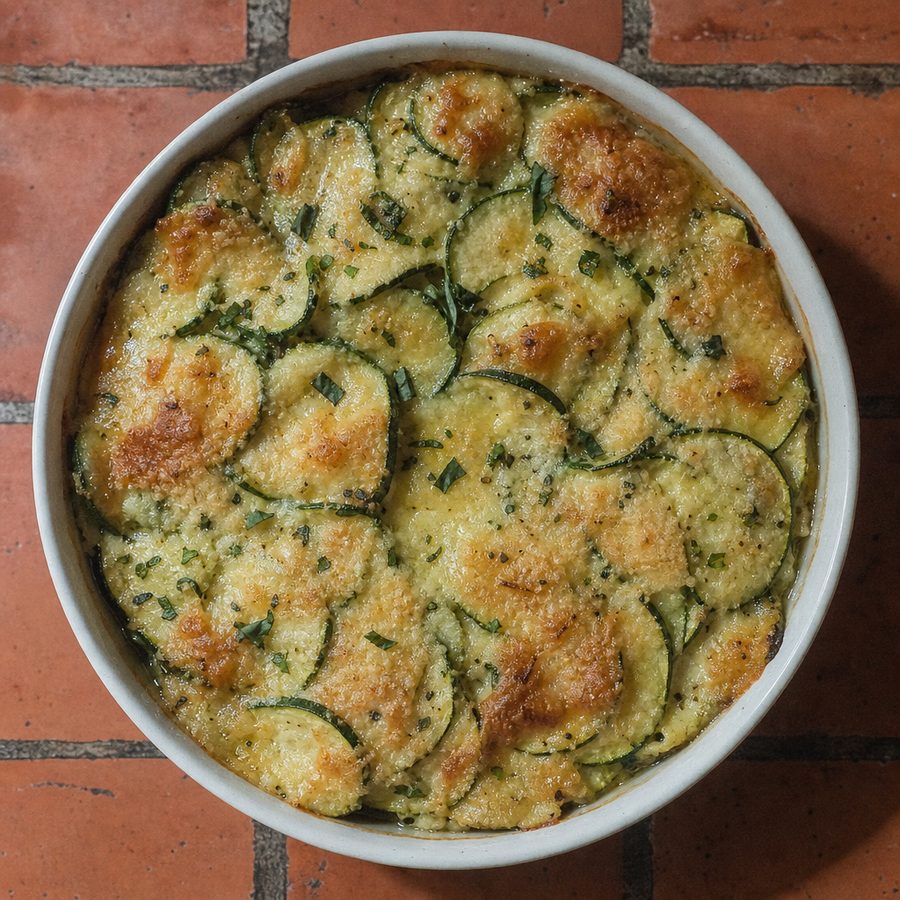
Thinly sliced zucchini is layered with sautéed onion, garlic, and thyme, bound in a custard of milk, eggs, and parmesan, then baked until the top turns golden and the center sets.
Why You'll Love This Recipe
This is a quietly elegant vegetable dinner that turns an abundance of summer zucchini into something worth setting on the table for company. It suits anyone who wants a meatless main that still eats like a proper meal, hearty enough to stand on its own and gentle enough to sit alongside a green salad or a piece of crusty bread. It is a good answer to the late-summer glut of zucchini, and it reheats well enough to be worth making on a Sunday for the week ahead.
Two steps carry this one. First, salting and blotting the zucchini pulls out the water that would otherwise pool in the dish and dilute everything. Dry slices bake into tender, custard-soaked layers instead of a soupy one. Second, the sauce is a savory custard: eggs and milk whisked with parmesan set gently in the oven, so the whole gratin holds together in sliceable layers rather than sliding apart. The parmesan on top browns into a nutty, golden crust, while the thyme and slowly softened onion and garlic give the mild zucchini a savory backbone.
Creamy custard and tender vegetable, held together in neat layers rather than collapsing into one another in the dish. The eggs and parmesan give it real staying power, and the slow bake concentrates the zucchini rather than leaving it watery. It is rich-tasting without being heavy, and full of the kind of savory, comforting flavor that makes a vegetable feel like the center of the plate.
Ingredients
- 5 medium zucchini, thinly sliced
- 1 1/4 cups grated parmesan
- 1 1/4 cups milk
- 2 large eggs
- 3 cloves garlic, minced
- 1 small onion, sliced
- 1 tsp fresh thyme
- 3 1/2 tbsp olive oil
- 1/2 tsp salt
Instructions
- Salt and drain the zucchini: Preheat the oven to 375°F (190°C). Trim the ends off the zucchini and slice them into thin rounds, about an eighth of an inch thick, ideally with a mandoline for even slices. Lay the rounds in a single layer on a clean kitchen towel or paper towels, sprinkle lightly with some of the salt, and let them sit for 10 minutes so the salt draws out moisture. Press a second towel firmly on top and blot until the slices feel dry to the touch. This step is what keeps the finished gratin from going watery.
- Sauté the aromatics: Peel and thinly slice the onion, and peel and mince the garlic. Warm the olive oil in a skillet over medium heat, add the onion, and cook, stirring now and then, until soft and translucent, about 6 to 8 minutes. Add the garlic and cook until fragrant, about 1 minute more, taking care not to let it brown. Remove from the heat and set aside.
- Make the custard: Strip the thyme leaves from their stems. In a bowl, whisk together the milk, eggs, most of the grated parmesan, the thyme leaves, and the remaining salt until smooth and evenly combined. Reserve the rest of the parmesan for the top.
- Layer the gratin: Rub a gratin dish or shallow baking dish lightly with a little olive oil. Arrange a layer of zucchini slices across the bottom, overlapping them slightly like shingles. Scatter over some of the sautéed onion and garlic, then ladle over a little of the custard. Repeat the layers until everything is used, finishing with a layer of zucchini, and pour any remaining custard evenly over the top so it settles into the layers.
- Top and bake: Sprinkle the reserved parmesan evenly over the surface. Bake in the center of the oven for about 40 minutes, until the top is golden brown and the custard is set. The center should no longer jiggle when you gently shake the dish, and a knife slipped in should come out clean. Let the gratin rest for 10 minutes before serving so it firms up and slices cleanly.
Variations
- Golden crust: Sprinkle a handful of breadcrumbs over the parmesan before baking for a crisper, more textured top. This adds gluten.
- Tomato layer: Tuck thin slices of ripe tomato between the zucchini layers for bright acidity; blot them first so they do not add extra moisture.
- Herb swap: Trade the thyme for chopped fresh basil, oregano, or rosemary to shift the dish toward a different corner of the garden.
- Gruyère finish: Replace part of the parmesan on top with grated gruyère for a nuttier, meltier crust. This adds dairy.
- Spiced warmth: Add a pinch of grated nutmeg and a little black pepper to the custard for a subtle, savory warmth that plays well with the eggs and cheese.
Storage & Leftovers
Refrigerator: Let the gratin cool, then cover the dish or transfer portions to an airtight container and refrigerate for up to four days. The flavor deepens overnight as the thyme and garlic settle in, and cold slices firm up nicely.
Reheating: Warm individual portions in a 350°F (175°C) oven or toaster oven for about 10 to 15 minutes, until heated through and the top re-crisps. A microwave works in a pinch but leaves the top soft; either way, cover loosely so the custard warms gently without drying out at the edges.
Make-ahead: You can salt and blot the zucchini and sauté the onion and garlic a day in advance, storing them separately in the refrigerator, so assembly is quick. The fully assembled, unbaked gratin can also sit covered in the refrigerator for a few hours before it goes in the oven. Add a few extra minutes of baking time if it goes in cold.
Notes & Tips
- Choose smaller zucchini: Pick firm, medium or small zucchini with glossy skin. Smaller ones have fewer seeds and less water, so they slice cleanly and bake into tidy layers; oversized zucchini turn spongy and release too much liquid.
- Do not skip the salting: The 10-minute salt-and-blot step is the difference between a set gratin and a watery one. If you are short on time, salt the slices while the oven preheats and the onion cooks so it does no damage to your schedule.
- Grate your own parmesan: A block of parmesan grated fresh melts into the custard and browns far better than the pre-grated tubs, which contain anti-caking agents that keep it from melting smoothly.
- Salt the zucchini first: Zucchini is mostly water, and that water has to go somewhere. Salting the slices and pressing them dry before they are layered is the difference between a gratin that slices cleanly and one that pools on the plate.
- Judge doneness by the center: The gratin is done when the middle no longer jiggles and a knife comes out clean. If the top browns before the center sets, lay a sheet of foil loosely over it and keep baking.
- Serve it alongside: This eats beautifully with a simple lemony green salad or a slice of gluten-free crusty bread to catch the custard. It works warm from the oven or at room temperature, which makes it handy for a make-ahead meal.
Nutrition & Mindful Eating
- The squash, the custard and the parmesan crust are three layers doing three different jobs. The zucchini softens and sweetens, the eggs and milk set around it and hold everything together, and the cheese on top browns into the salty, crackly part people go for first.
- Zucchini gives up a lot of water in the oven, which is why salting the slices first is what turns them silky, and it brings vitamin C and potassium into a dish that is otherwise creamy and rich.
- Eggs and milk set into a soft custard around the slices, tender enough to spoon and firm enough to hold a square, and between them they carry protein, calcium and B12 into something built mostly on squash.
- Parmesan is aged long enough to taste savory and almost crystalline, so a scattering over the top flavors the whole dish, and under the heat it melts and browns into a crust that gives way under a spoon.
- Onion softened in olive oil, garlic and fresh thyme are what you smell before this ever reaches the table. The onion and garlic go sweet and mellow in the oven and feed the bacteria in your gut, and the thyme keeps the dish tasting of the garden as much as of cream.
- As you eat, let the gratin rest a few minutes first, then feel the browned top give way to the soft slices underneath, and go slowly enough that the thyme and the sweet baked squash both have time to register.
Frequently Asked Questions
Why did my gratin turn out watery?
Almost always because the zucchini was not dried enough. Salt the slices, let them sit for the full 10 minutes, and press them firmly between towels until they feel dry before layering. Choosing smaller zucchini, which hold less water than the big ones, also cuts down on excess liquid.
Can I make it ahead for a dinner party?
Yes. You can assemble the whole dish, cover it, and refrigerate it for a few hours before baking, or bake it earlier in the day and gently rewarm it. It also holds well at room temperature, so it is forgiving on timing.
My top browned before the middle set. What do I do?
Lay a loose sheet of foil over the top and keep baking until the center no longer jiggles and a knife comes out clean. The foil stops further browning while the custard finishes setting underneath.
Can I use a different cheese?
Parmesan gives the best savory crust and melts cleanly into the custard, but you can swap part of it for gruyère or another firm, good-melting cheese. Softer fresh cheeses release more moisture, so they are better stirred in sparingly than relied on for the whole dish.